Making colorful Korean bibimbap
What kind of food is bibimbap?
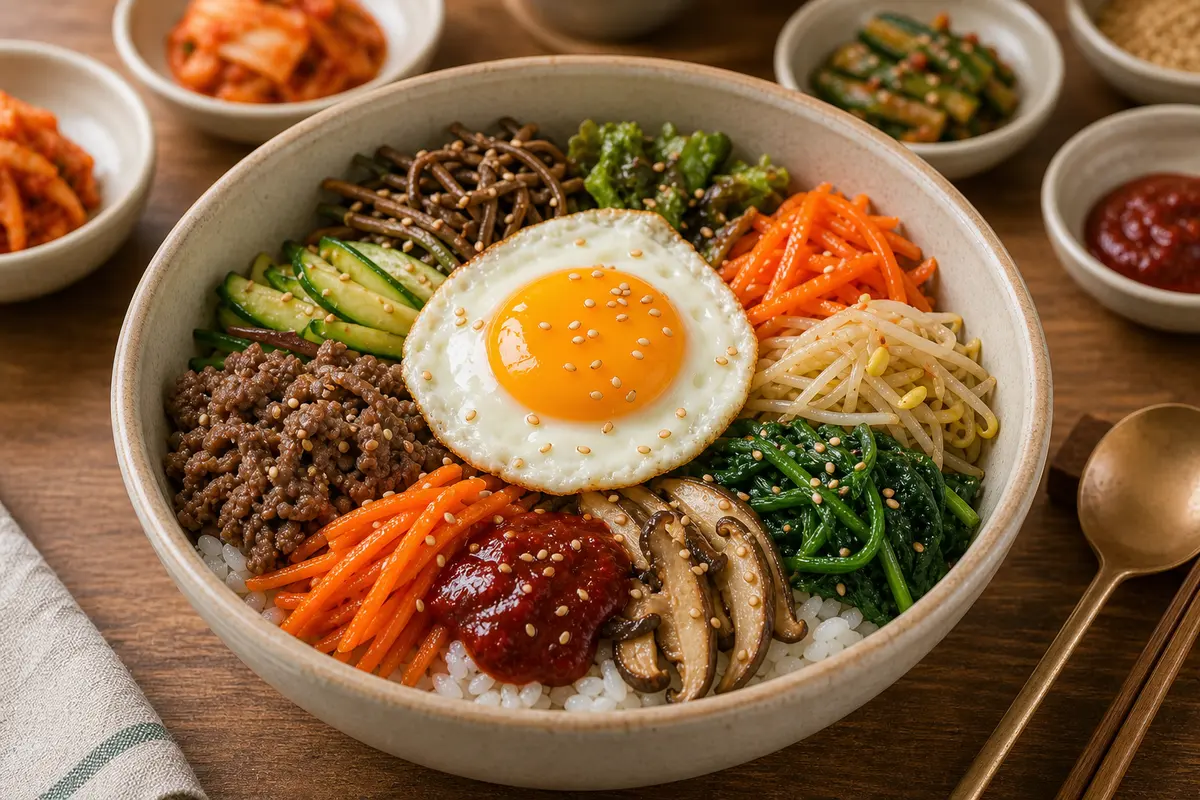
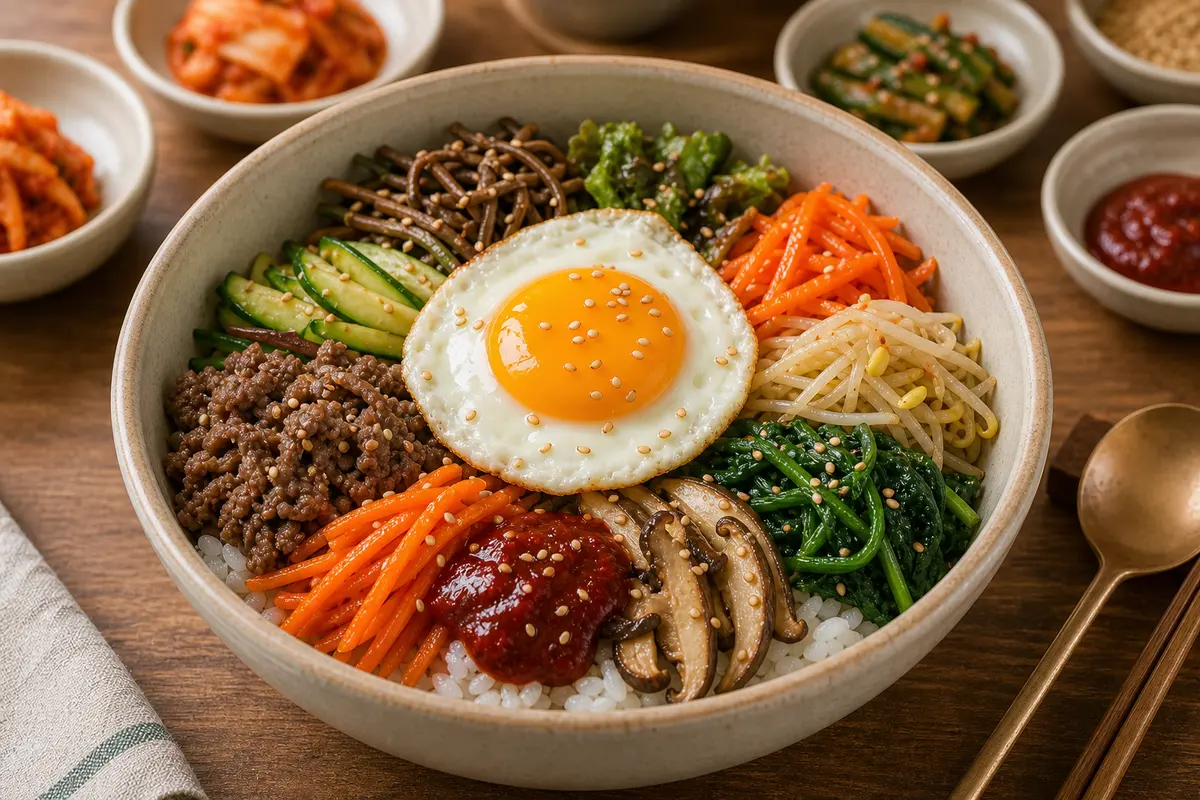
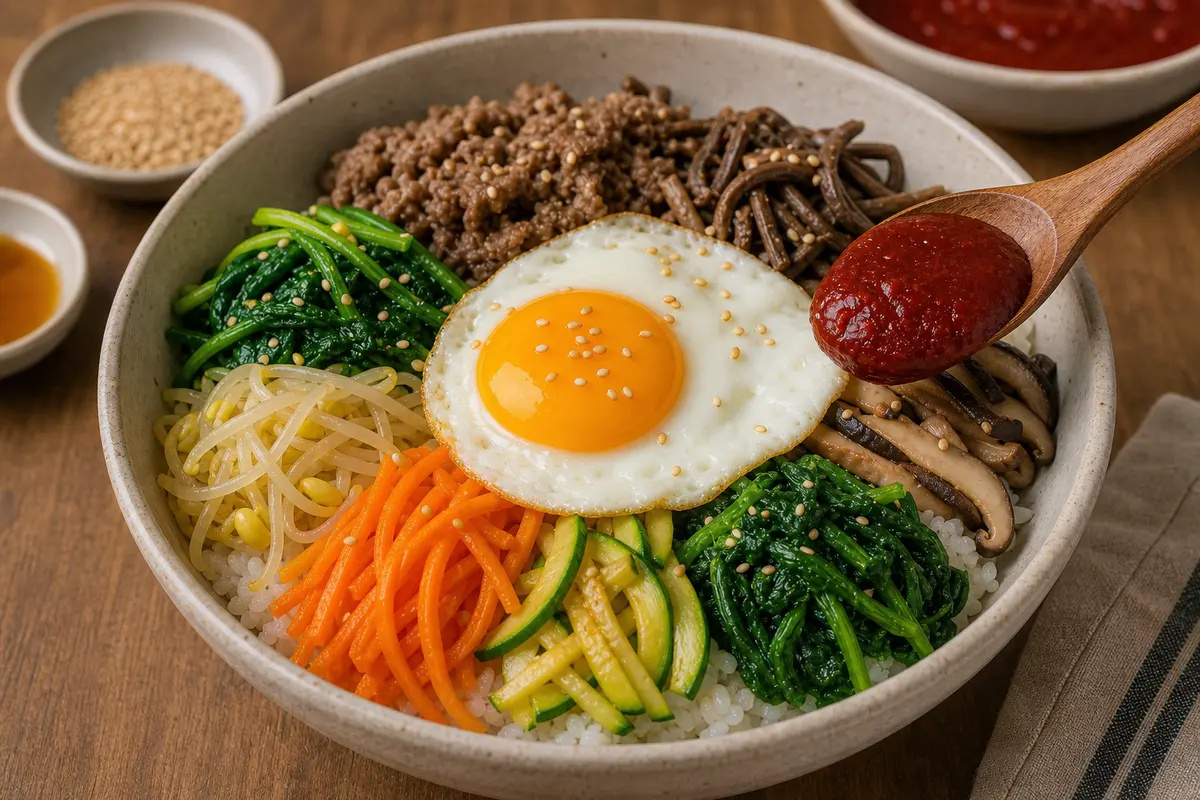
Bibimbap is a representative Korean one-bowl dish eaten by mixing various vegetables, meat, eggs, and red pepper paste seasoning on top of warm rice. The colors are vivid and the ingredients are visible at a glance, making it one of the first Korean dishes that foreigners think of when visiting Korea. Because the ingredients are prepared separately, it looks neat, and when eaten, you can enjoy a variety of flavors by mixing them all at once.
If you search for bibimbap in 10,000 Recipes, you will see various methods such as basic bibimbap, Jeonju bibimbap, stone pot bibimbap, and vegetable bibimbap. Today, we have outlined how to make a basic vegetable bibimbap that is easy to make at home, with vegetables, meat, eggs, and red pepper paste bibim sauce in a balanced manner.
Ingredients Preparation
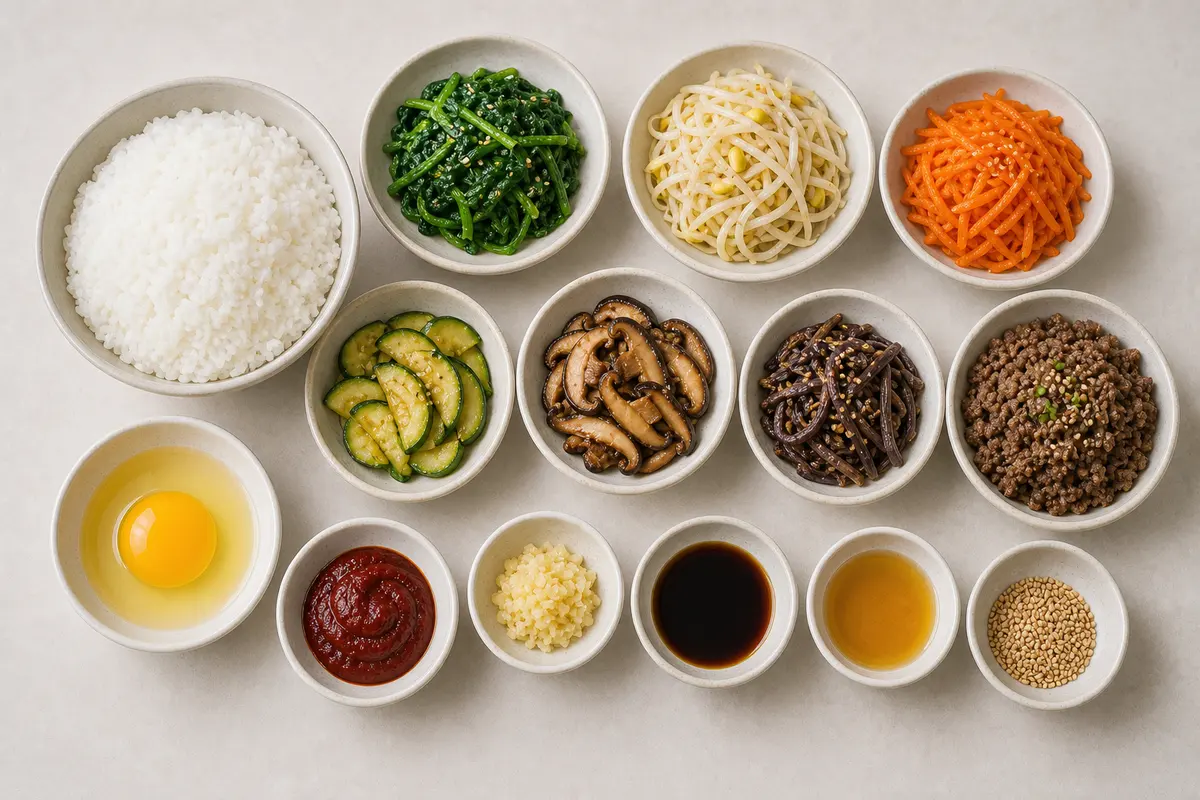
For 2 servings, prepare 2 bowls of warm rice, spinach sprouts, bean sprouts, carrots, zucchini, shiitake or oyster mushrooms, and fern greens. For meat toppings, use minced beef or thinly sliced bulgogi meat stir-fried with soy sauce, sugar, and minced garlic. If the eggs are soft-boiled and fried, the flavor adds to the flavor when mixed.
Bibimjang is made by mixing 2 tablespoons of red pepper paste, 1 tablespoon of sesame oil, 1 tablespoon of oligosaccharide or sugar, 1 teaspoon of vinegar, a little minced garlic, and sesame seeds. If the spiciness is too much for you, reduce the amount of red pepper paste and add a little soy sauce or sesame oil to make it milder.
Preparing and sautéing vegetables
Blanch the spinach and bean sprouts separately, squeeze out the water, and season lightly with salt, sesame oil, and minced garlic. Slice the carrots and zucchini into thin strips and lightly fry them in a pan to bring out the color and texture. Stir-frying mushrooms with a few drops of soy sauce improves their flavor.
For bibimbap, it is better to lightly season each ingredient rather than mixing them all at once. Since the red pepper paste bibim paste is mixed at the end, if the seasoning of the vegetables is too strong, the overall taste may be salty.
Order of putting it in a bowl
Place the warm rice in a large bowl and arrange the prepared vegetables around it so that the colors do not overlap. Place stir-fried beef and a fried egg in the center, and don't add a lot of red pepper paste bibim sauce from the beginning, just add about 1 tablespoon. Before eating, drizzle with sesame oil and sprinkle with sesame seeds to enhance the flavor.
If you want to create the feel of a stone pot, add a little sesame oil to a thick pan, add the rice, add the vegetables, and heat over low heat until the bottom sticks to the fragrant texture. If you're making it for the first time, it's delicious and clean enough even if you put it in a regular bowl.
Tips for delicious rubbing
For bibimbap, it is best to mix the ingredients evenly but move the spoon in large movements to avoid crushing the rice grains. If you add red pepper paste bibimjang little by little and adjust the spiciness and seasoning, there is less chance of failure. If you serve it with kimchi or soybean paste soup, you can enjoy it like a full Korean meal.
The leftover vegetables can be used again to make bibimbap the next day, and you can also make it vegetarian style by adding tofu or mushrooms instead of meat. Bibimbap is a flexible Korean food that allows you to change the ingredients to create a balanced bowl.
Good ordering tips for foreigners
When ordering bibimbap at a Korean restaurant, it is easy to control the spiciness by adding the red pepper paste little by little rather than all at once. If the scent of vegetables is unfamiliar to you, you can first mix egg yolk and sesame oil to soften it, then add seaweed powder or sesame seeds to enhance the nutty taste. If you are looking for light but hearty Korean food while traveling, bibimbap is an easy choice.