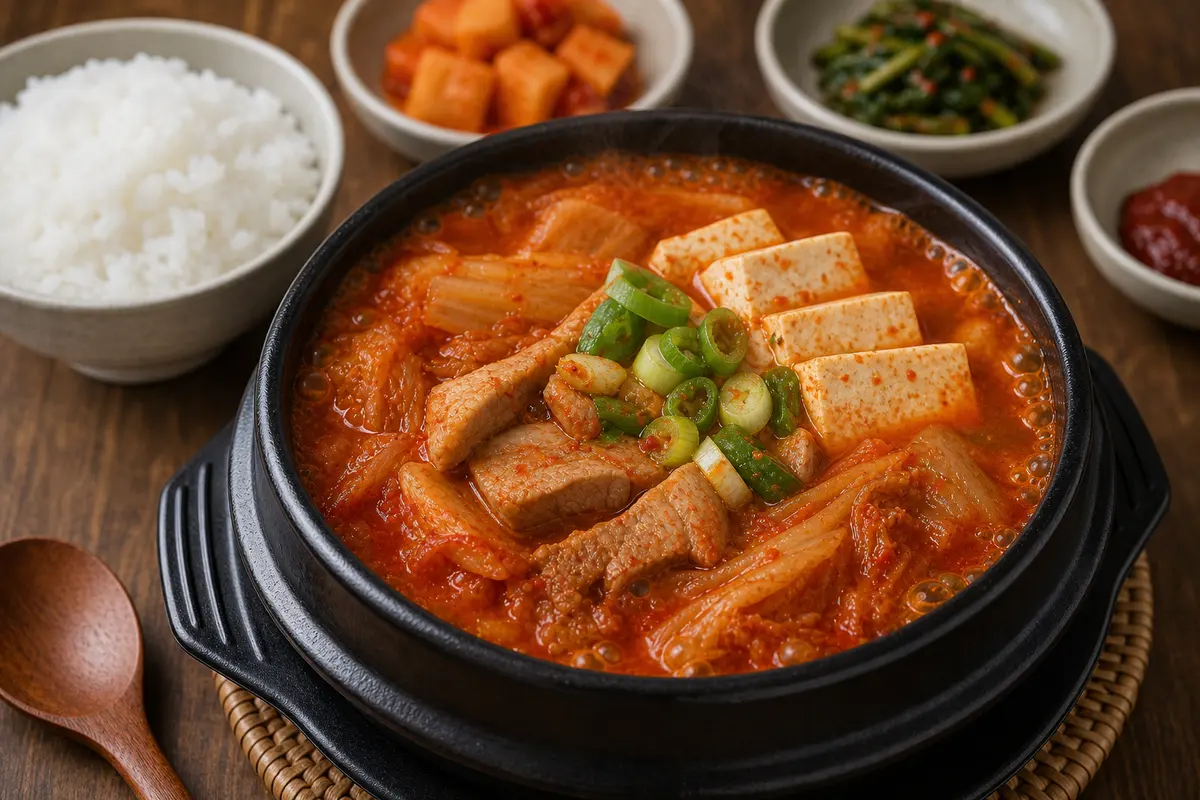
Making pork kimchi stew, the representative stew of Korean home-cooked meals
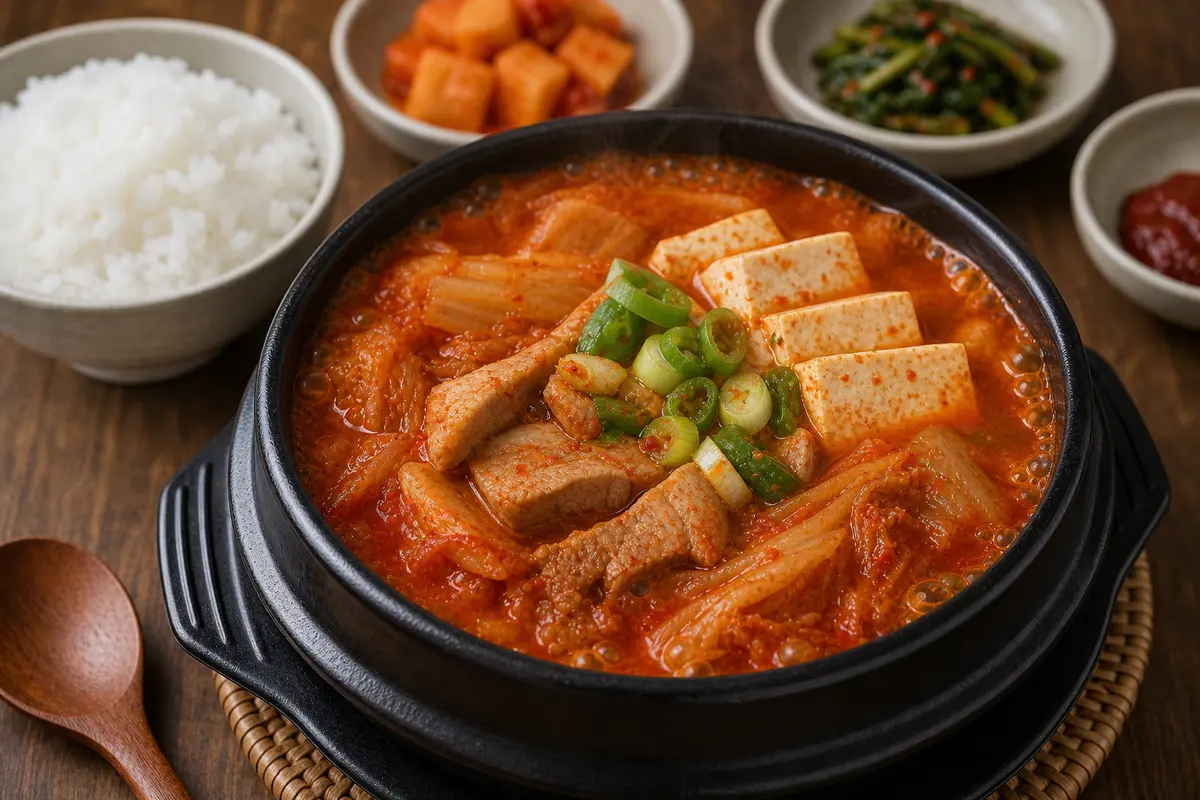
What kind of food is kimchi stew?
Kimchi stew is a representative Korean home-cooked meal made by boiling ripe kimchi with pork, tofu, and green onions. When served with rice, the spicy and sour soup is so addictive that you'll finish the bowl in no time. It is good to introduce kimchi to foreigners as a warm Korean food that can be enjoyed most naturally.
If you search for kimchi stew in 10,000 Recipes, you will see various combinations such as pork kimchi stew, tuna kimchi stew, spam kimchi stew, and aged kimchi stew. Today, I've summarized the most basic and easy-to-make deep-flavored pork kimchi stew, and the steps that are less likely to fail at home.
Ingredients Preparation
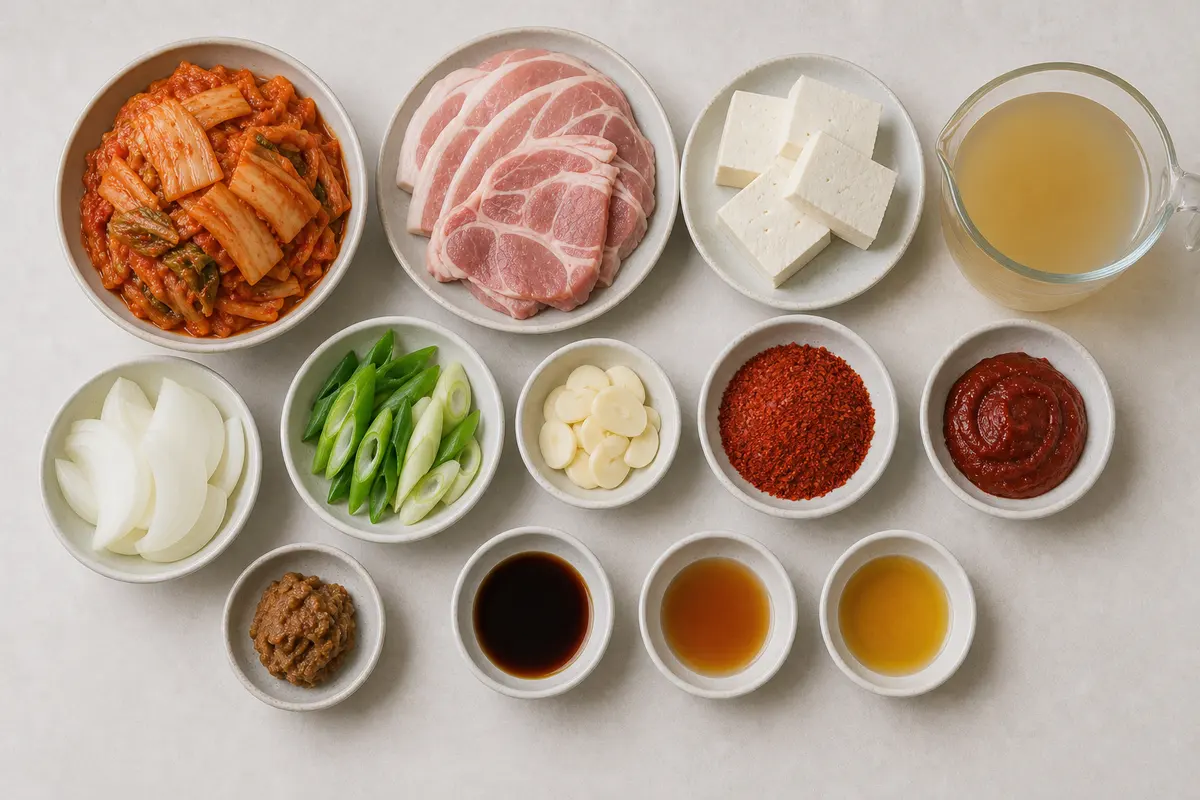
For 2 servings, prepare 2 cups of ripe cabbage kimchi, 200g of pork shoulder or pork belly, half a head of tofu, onion, green onion, minced garlic, red pepper powder, soup soy sauce or dark soy sauce, kimchi broth, and anchovy kelp broth. When making kimchi stew, you should use sour old kimchi or ripe kimchi to make the soup deep and refreshing.
If the kimchi is too sour, you can add a little sugar to round out the flavor. On the other hand, if the kimchi is undercooked, you can add a few drops of vinegar or a little kimchi broth to compensate for the sour taste.
Stir-fry kimchi and meat
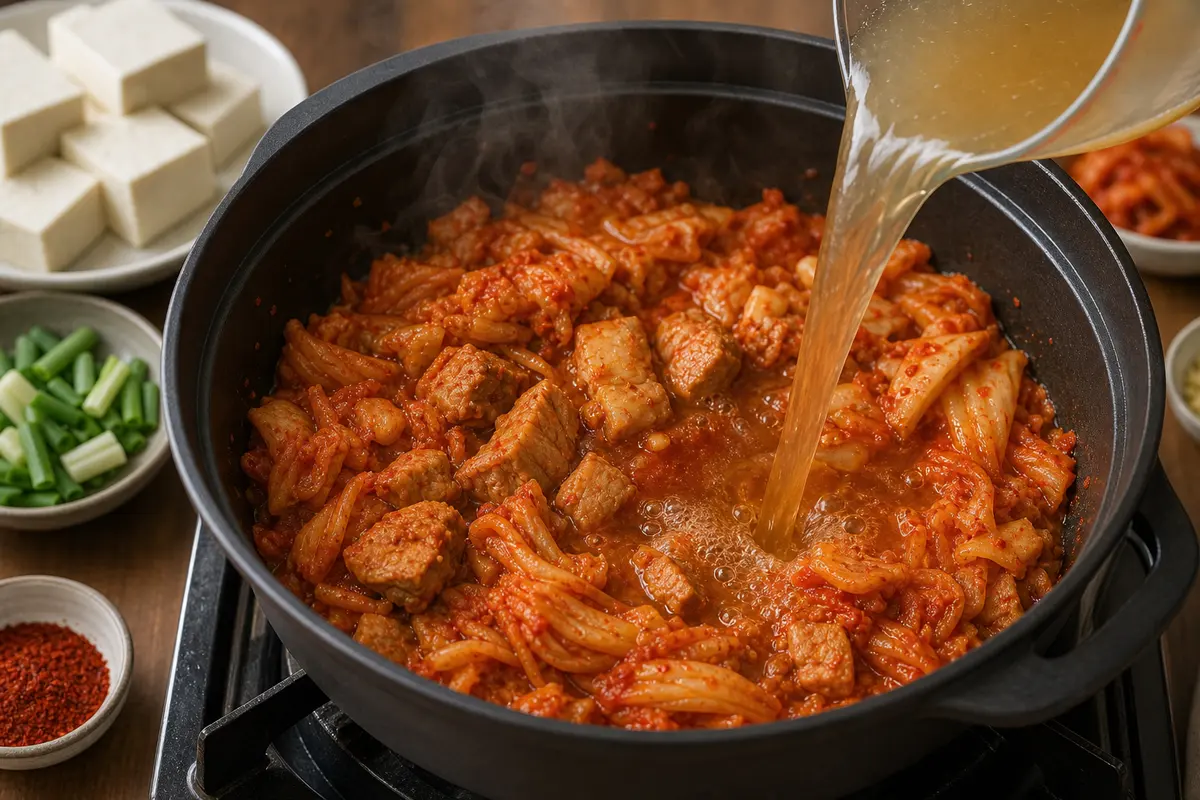
Put the pork in the pot first and fry until the outside is cooked. When a little oil comes out, add kimchi, minced garlic, and red pepper powder and fry them together. Through this process, the sour taste of the kimchi softens and the savory flavor of the meat is well absorbed into the soup.
When the kimchi wilts and the color darkens, pour in the kimchi broth and broth. You can make it with just water, but if you use anchovy kelp broth, the soup will be much deeper.
Order of boiling
When the soup begins to boil, reduce the heat to medium-low and simmer for at least 10 minutes. The longer you boil kimchi stew, the more delicious it becomes as the flavors of kimchi and meat blend into the soup. Check the seasoning halfway through and if it is bland, adjust with soy sauce or salt. If it is too thick, add a little more broth.
At the end, add tofu and green onions and boil for about 3 more minutes to complete. If you add tofu too early, it will easily break, so it is better to add it at the end to preserve its shape.
Tips for eating deliciously
Kimchi stew goes best with freshly cooked white rice. If you lightly spoon the soup onto rice and eat it with kimchi, meat, and tofu, the spicy and savory flavors are balanced. People who find the spicy taste a bit uncomfortable can add a generous amount of tofu and use tuna or Spam to enjoy a softer, more familiar taste.
When explaining it to foreigners, it is easier to say “Korean spicy kimchi stew.” The fermented umami of kimchi, the deep flavor of pork, and the warm soup combine to create a dish that best represents the atmosphere of Korean home cooking.
Storage and application tips
Kimchi stew is a food that becomes more flavorful if you boil it once and then reheat it. However, if tofu is left for a long time, its texture may become soft, so it is a good idea to store the tofu separately when leaving it or to add a little new tofu when reheating.
If you add tuna instead of pork, the cooking time will be shorter, and if you add Spam, it will have a salty taste that even foreigners are familiar with. If you feel that the sour and spicy taste of kimchi is strong, add a little more onion to compensate for the sweetness, so you can eat it much more comfortably.