The beginning of a savory Korean home-cooked meal, making soybean paste stew
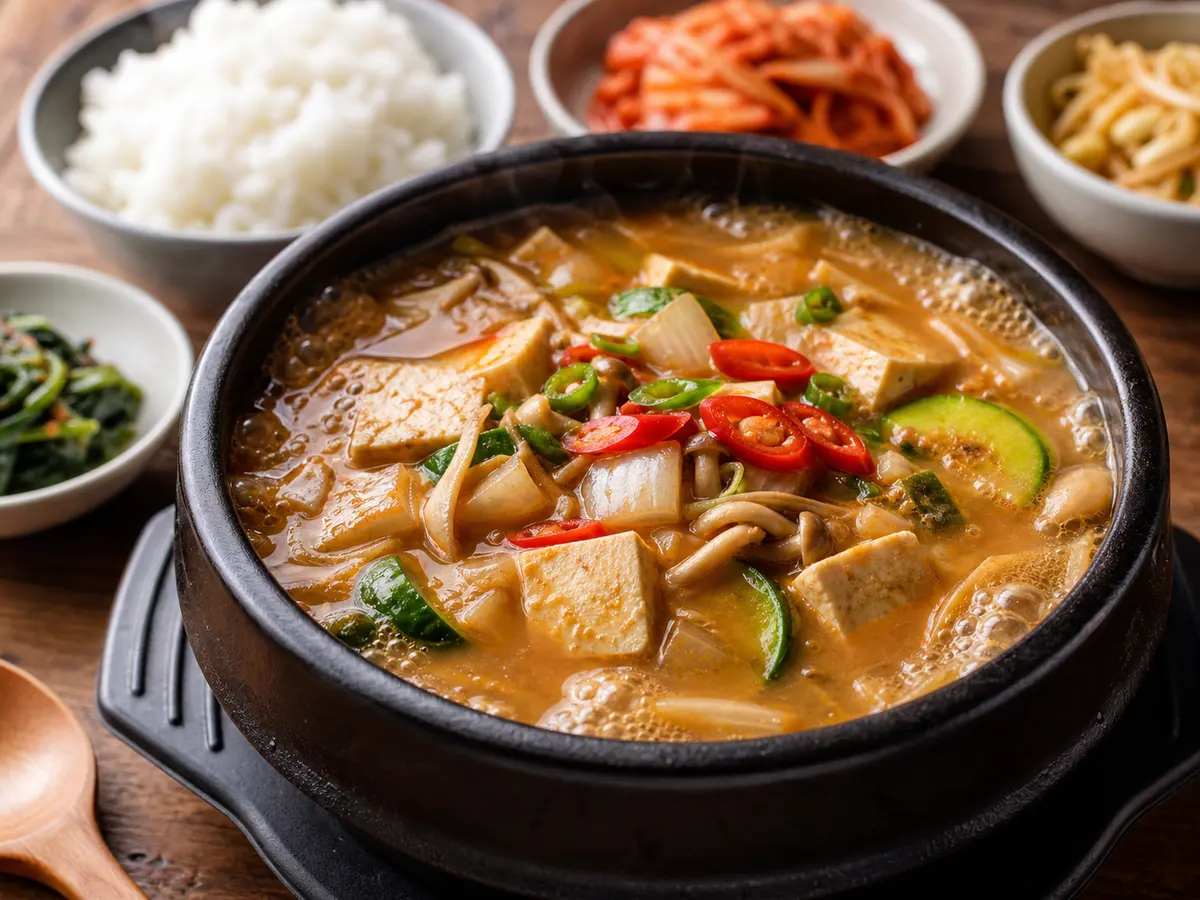
Soybean paste stew is a representative stew that is indispensable when talking about Korean home cooking. While kimchi stew awakens the taste buds with its spicy and familiar acidity, soybean paste stew makes the dining table more comfortable with the savory scent of soybean paste made from fermented soybeans. It is a menu item that foreigners traveling to Korea often encounter at meat restaurants or local restaurants, and the sight of it bubbling in a hot earthen pot gives the impression of “real Korean food.”
If you look at the search results for 10,000 Recipes' soybean paste stew, there are many variations, from the basic type with just tofu and vegetables to meat restaurant style, brisket, clams, and shepherd's purse soybean paste stew. In this article, we have compiled a basic Korean-style soybean paste stew with tofu, zucchini, onions, and mushrooms so that even first-time cooks can easily follow along. Even if the ingredients are simple, if you follow the order of mixing the broth and soybean paste, the soup will be much deeper and cleaner.
Soybean paste stew ingredients
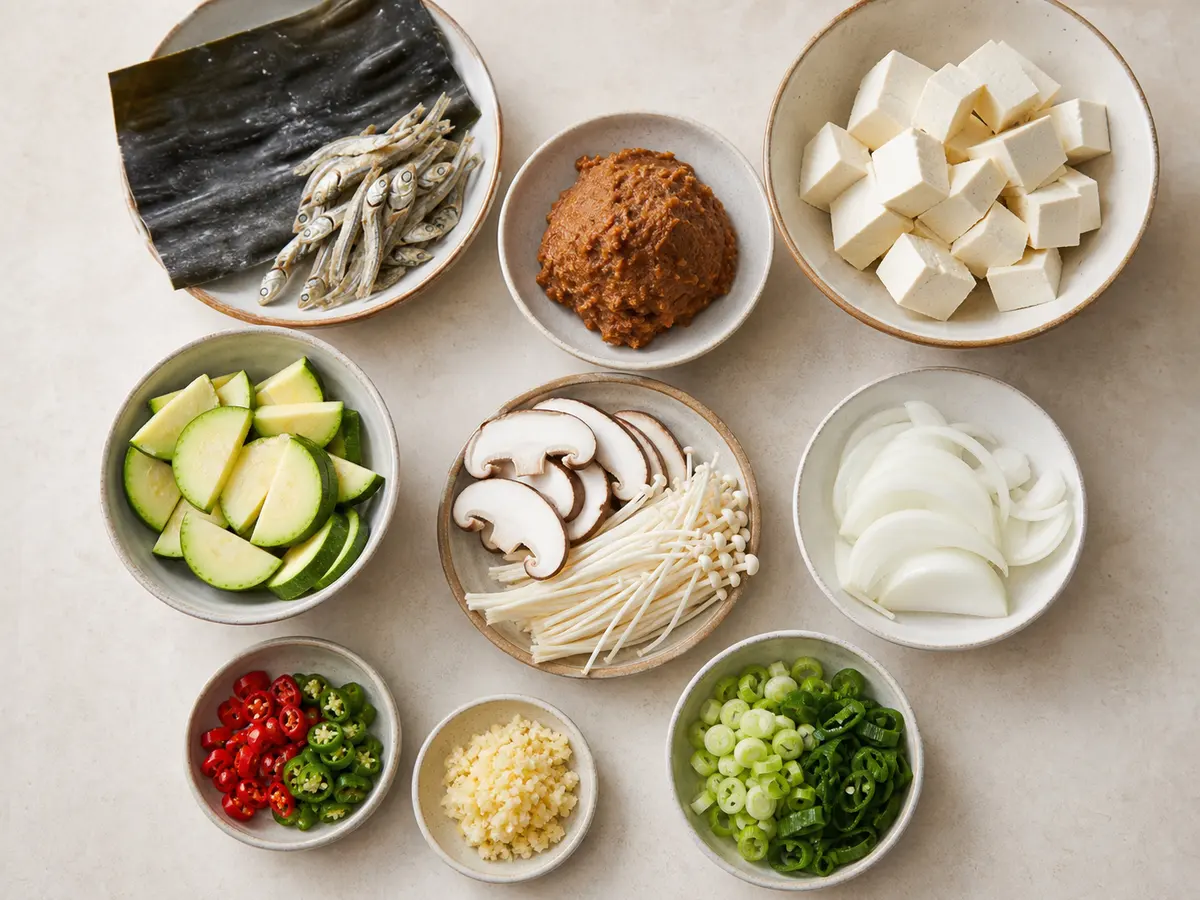
For 2 servings, prepare 600ml of water, 6 anchovies for soup, 1 piece of kelp, 2 tablespoons of soybean paste, 1 teaspoon of minced garlic, 1/2 tofu, 1/3 zucchini, 1/2 onion, a handful of shiitake or oyster mushrooms, 1/2 green onion, 1 Cheongyang pepper, and a little red pepper. Since soybean paste has different salt levels depending on the household, it is better to start with 2 tablespoons and add seasoning at the end rather than adding a lot from the beginning.
If you want a stronger, more meat-like flavor, you can add 1/2 teaspoon of red pepper powder or 1 teaspoon of red pepper paste. However, if you want to enjoy the natural flavor of soybean paste, it is recommended to omit the red pepper paste and add only Cheongyang pepper to adjust the spiciness. When introducing it to foreigners, it is easier to understand if you explain it as “Korean soybean paste stew.”
Broth and vegetable preparation
Put water, anchovies, and kelp in a pot and boil over medium heat for about 8 minutes. If the kelp is boiled for a long time, its slippery taste can become stronger, so take it out first. Boil the anchovies for about 2 more minutes and then take them out. If you don't have time, you can just use rice water or water, but if you use anchovy kelp broth, the saltiness of the soybean paste will be rounded out and the soup will have a much richer flavor.
Dice the tofu into bite-sized pieces and cut the zucchini into half-moon shapes. Chop the onion coarsely and tear or slice the mushrooms into bite-size pieces. Chop the green onions and peppers at the end to preserve their flavor. If you cut the ingredients too small, they will become mushy while boiling, so it is best to keep them small enough to fit on a spoon.
Boiling Order
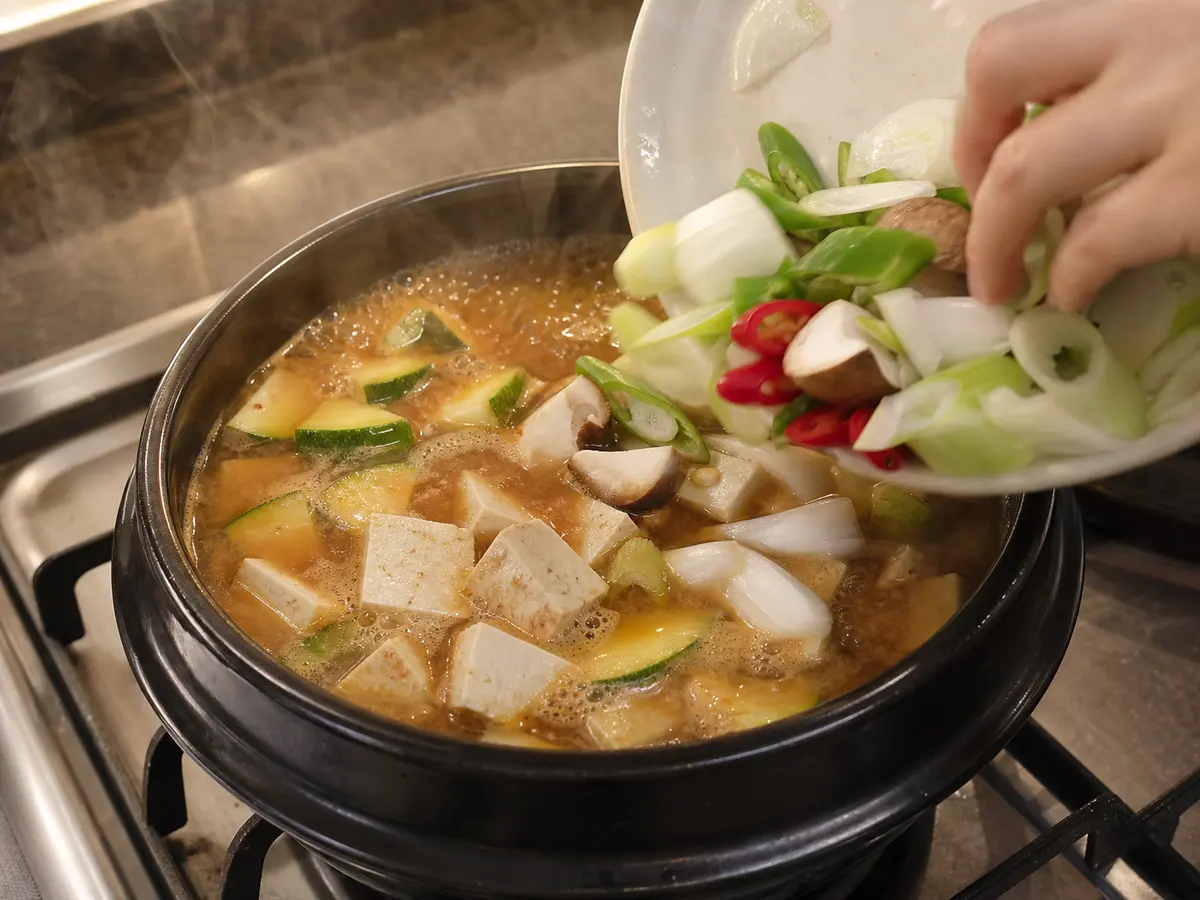
Dissolve the soybean paste into the finished broth using a strainer or spoon. If there are lumps of soybean paste remaining, the flavor of the soup will be uneven, so loosen it sufficiently at this stage. When the soup starts to boil, add minced garlic, onion, zucchini, and mushrooms and boil for 4 to 5 minutes. When the vegetables are half-cooked, add the tofu, lower the heat to medium-low, and simmer for 3 more minutes.
Lastly, add green onions, Cheongyang peppers, and red peppers and boil for one more minute to create fragrant soybean paste stew. Check the seasoning and if it is bland, add a little more soybean paste. If it is salty, add 2 to 3 tablespoons of water at a time. Soybean paste stew does not necessarily become more delicious the longer it is boiled, but it is at its cleanest when the tofu and vegetables retain their shape.
Tips for eating deliciously
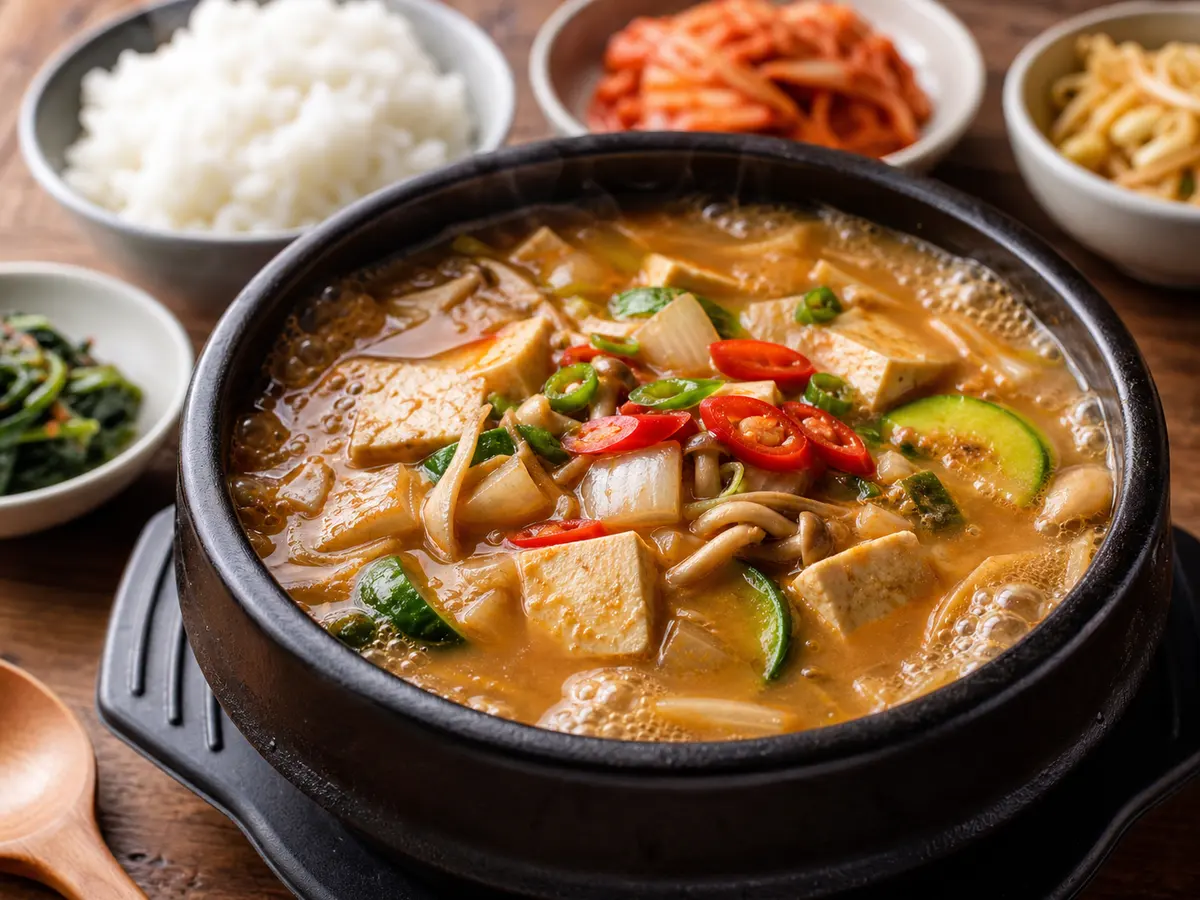
Soybean paste stew has the most stable taste when eaten with white rice. The savory soup stands out even more when served with light side dishes such as kimchi, vegetables, and egg rolls. On days when you grill meat, you can make it slightly salty and spicy, and when you usually eat it at home, it is good to add plenty of tofu and mushrooms and boil it gently.
Leftover soybean paste stew can be refrigerated and reheated the next day, but reheat it slowly over low heat to prevent the tofu from falling apart. For those who are new to Korean food, soybean paste stew is a menu that naturally introduces the charm of fermented food.Because it is a stew where you can feel the warm depth rather than the strong seasoning, it has a taste that makes you want to eat rice after eating a spoonful.