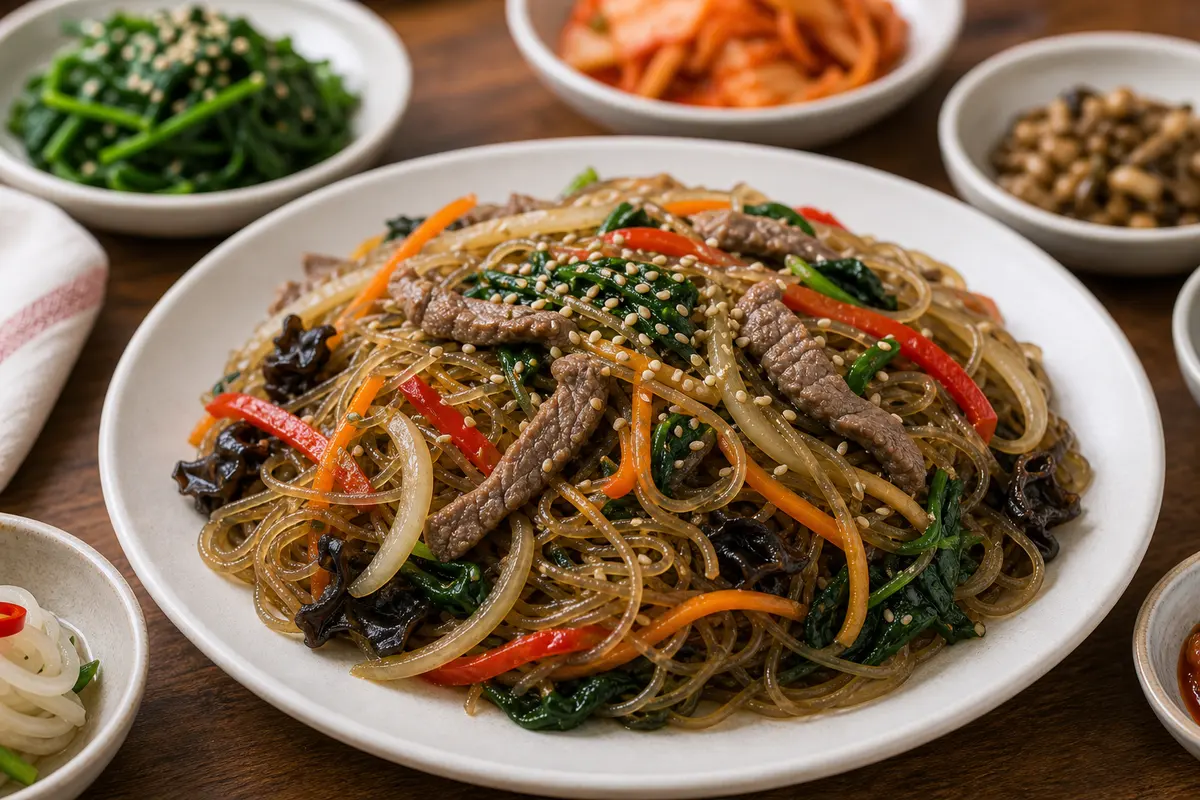
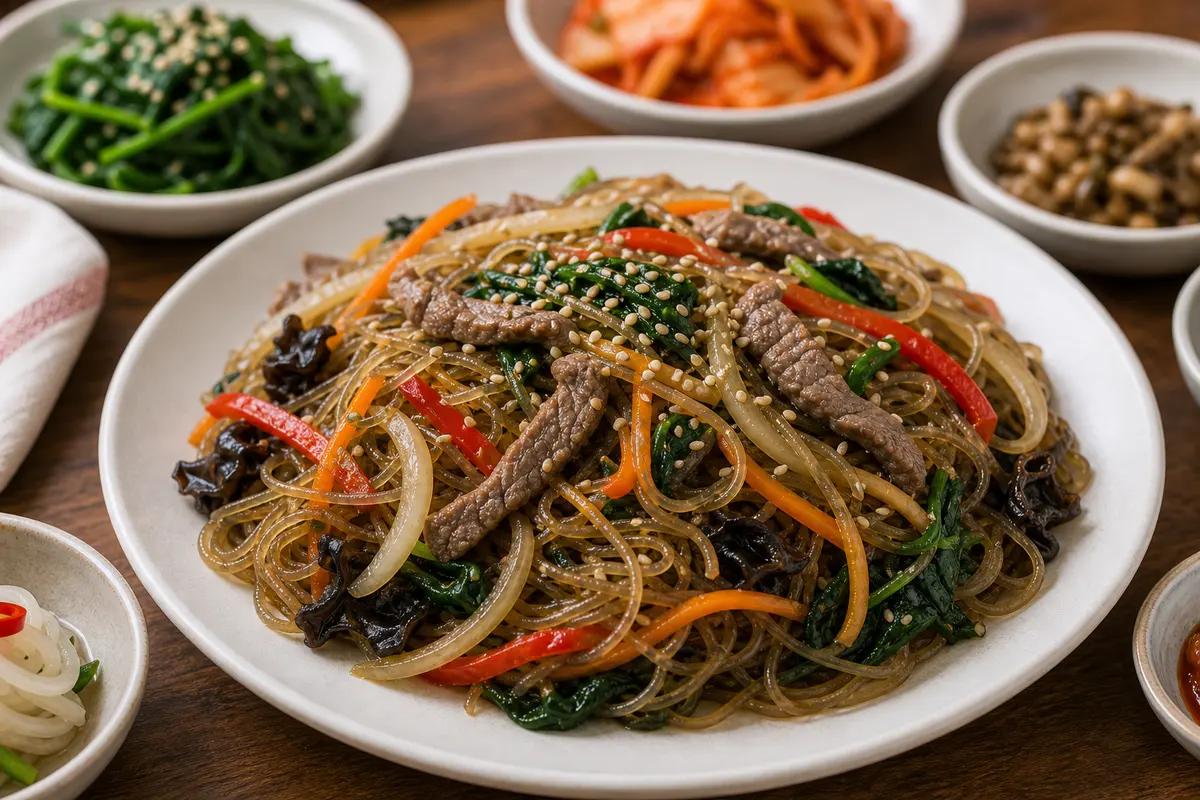
Photo of Japchae, Korea's representative feast food with glass noodles and vegetables
Japchae, the representative menu of Korean banquets
Japchae is a representative food often served on birthdays, holidays, and banquets in Korea. Spinach, carrots, onions, mushrooms, meat, etc. are added to transparent and chewy glass noodles and mixed with soy sauce and sesame oil seasoning to create a savory, sweet and salty taste. It's colorful and has a rich texture, making it a good menu item for introducing Korean food to foreigners. Japchae is delicious when eaten warm, and retains its flavor well even when cooled, making it a good choice for lunch boxes or guest tables.
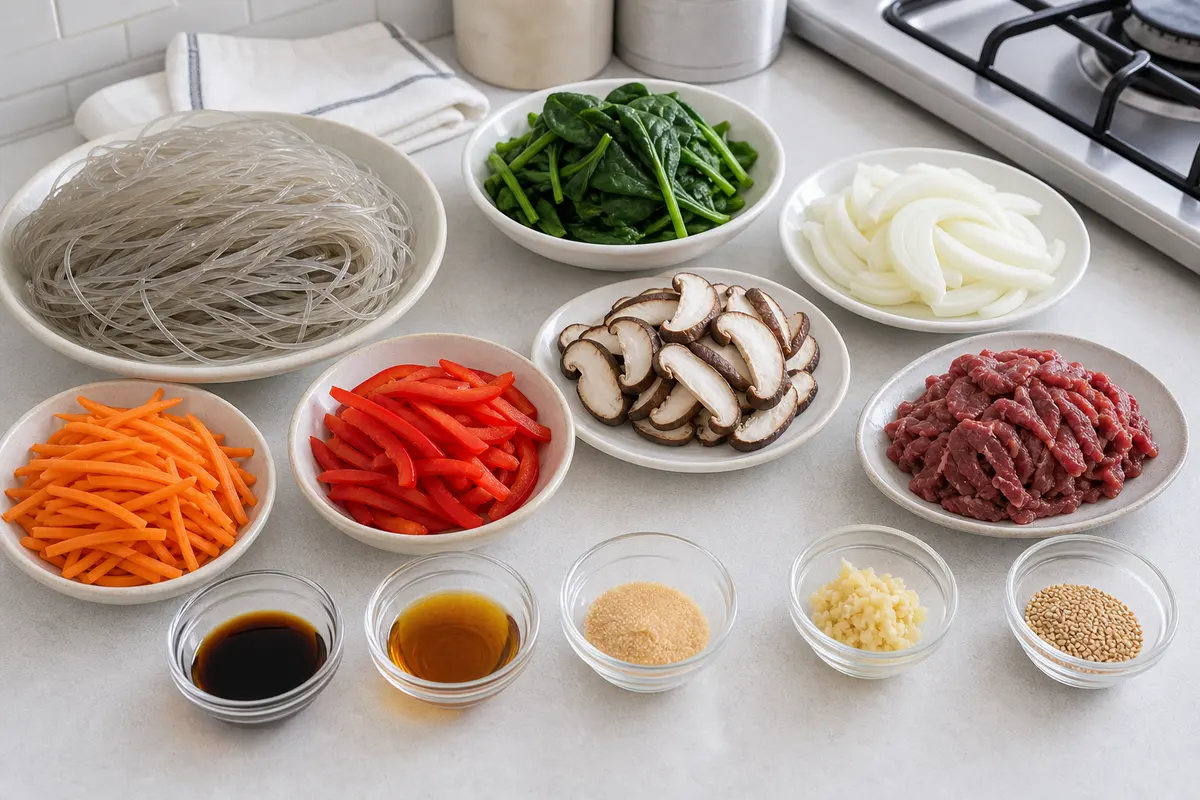
japchae ingredients
For 4 servings, prepare 200g of glass noodles, a handful of spinach, 1/2 carrot, 1/2 onion, a handful of shiitake or oyster mushrooms, and 150g of beef. For seasoning, use 4 tablespoons of soy sauce, 2 tablespoons of sugar, 2 tablespoons of sesame oil, 1 tablespoon of minced garlic, a little pepper, and sesame seeds. You can just add vegetables without meat, or add plenty of mushrooms to enhance the flavor. The boiling time for glass noodles varies depending on the product, so it is recommended to refer to the packaging instructions.
Cooking order
1. Prepare each ingredient
After blanching the spinach, rinse in cold water, squeeze out the moisture, and lightly season with salt and sesame oil. Slice the carrots and onions, and cut the mushrooms into bite-size pieces. If you season the beef with soy sauce, sugar, minced garlic, and a little pepper, it will have a deeper flavor when stir-fried. When making japchae, it is important to prepare the ingredients individually to preserve the texture and color rather than frying them all at once.
2. Stir-fry vegetables and meat separately
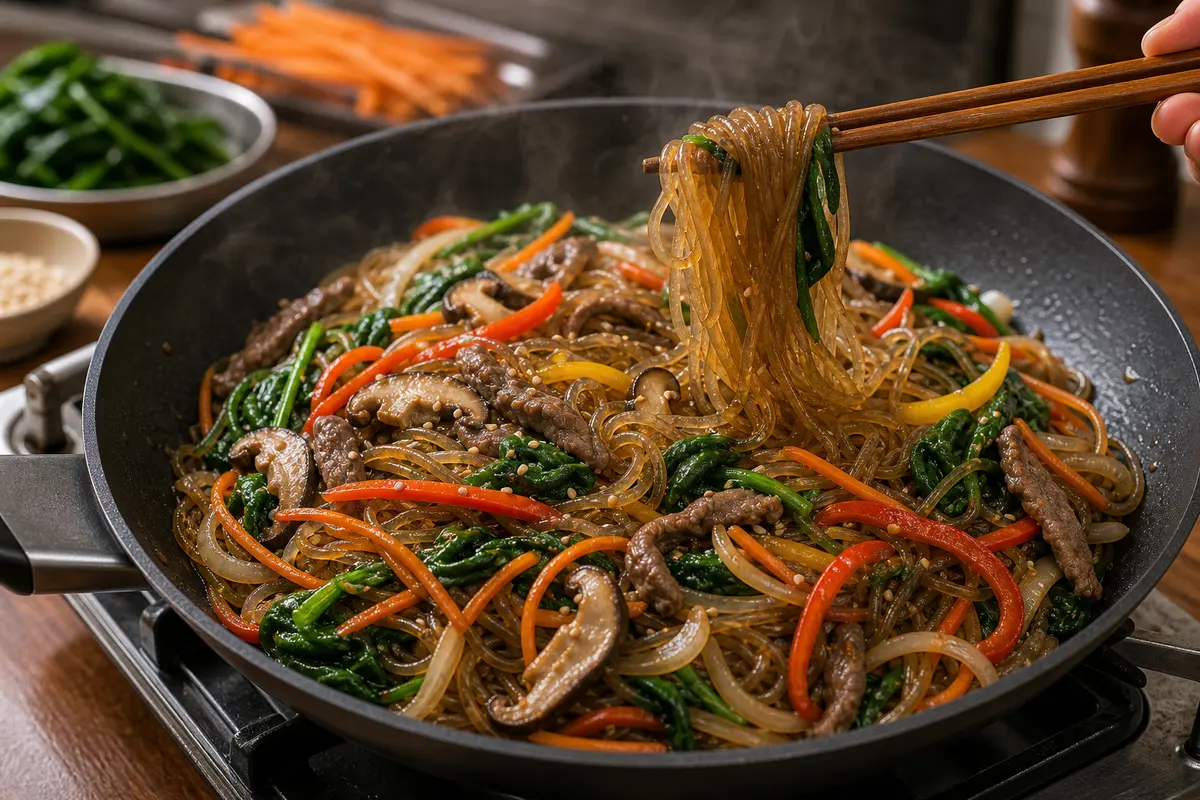
Add some oil to the pan and fry the onions, carrots, mushrooms, and meat. If you fry the light-colored ingredients first, the pan will be less messy and the taste will be cleaner. It is best not to fry vegetables for too long, but to cook them just enough to leave a crunchy texture. Collect the stir-fried ingredients separately in a large bowl.
3. Boil and season the glass noodles
Boil the glass noodles in boiling water, take them out when they become transparent, rinse lightly in cold water, and then drain. If you add glass noodles, soy sauce, sugar, and sesame oil to a pan and fry them briefly, the seasoning will absorb better and the noodles will become firmer. Then add the prepared vegetables and meat and mix everything evenly. Adding sesame oil and sesame seeds at the end brings out the unique savory flavor of japchae.
Tips for making it delicious
The key to Japchae is the texture of the glass noodles. If you boil it too long, it spreads easily, and if you boil it too little, it can become hard, so try eating a piece after boiling to check. It is safer to adjust the seasoning little by little while mixing rather than adding too much from the beginning. As the japchae cools, it becomes a little more seasoned, so it's okay if it tastes a little bland when you eat it right away.
How to enjoy Japchae more abundantly
Japchae is good as a side dish, or you can eat it like japchae rice on top of rice. If you want a spicy taste, you can enjoy it in a different way by adding a little chili oil or Cheongyang pepper. If you lightly fry the remaining japchae in a pan and warm it up, the glass noodles will become soft again and the sesame oil flavor will come back to life. Although it looks like a holiday food, it is a Korean dish that is easy to make at home as long as you prepare the ingredients.
Storage and warming tips
After the japchae is completely cooled, place it in an airtight container and refrigerate it. When you eat it again, if you heat it in a pan over low heat rather than in a microwave, the noodles will be less lumpy and the texture will be better. If stored for a long time, the noodles may absorb the seasoning and become more salty, so it is best to eat them within 1 to 2 days.
Guide to cooking Korean noodles. Mulnaengmyeon, bibimnaengmyeon, kalguksu, banquet noodles, makguksu, bean noodles, ramen, black bean noodles, and jjamppong were all kindly organized from a foreigner's perspective.
Guide to Korean traditional liquor. Makgeolli, soju, fruit soju, cheongju, herbal liquor, traditional liquor and snack pairings have been carefully organized from a foreigner's perspective.
For foreigners using Korean nail salons for the first time, we have compiled information on how to make a reservation, gel nail prices, design consultation, removal costs, hygiene confirmation, allergy notice, and after-care tips.
For foreigners and travelers living in Korea, we have organized crime, fire, emergency, residence consultation, tourist interpretation, cyber fraud report numbers, disaster text messages, emergency bags, and preparations for moving to the hospital.