How to make sweet and spicy Korean stir-fried pork
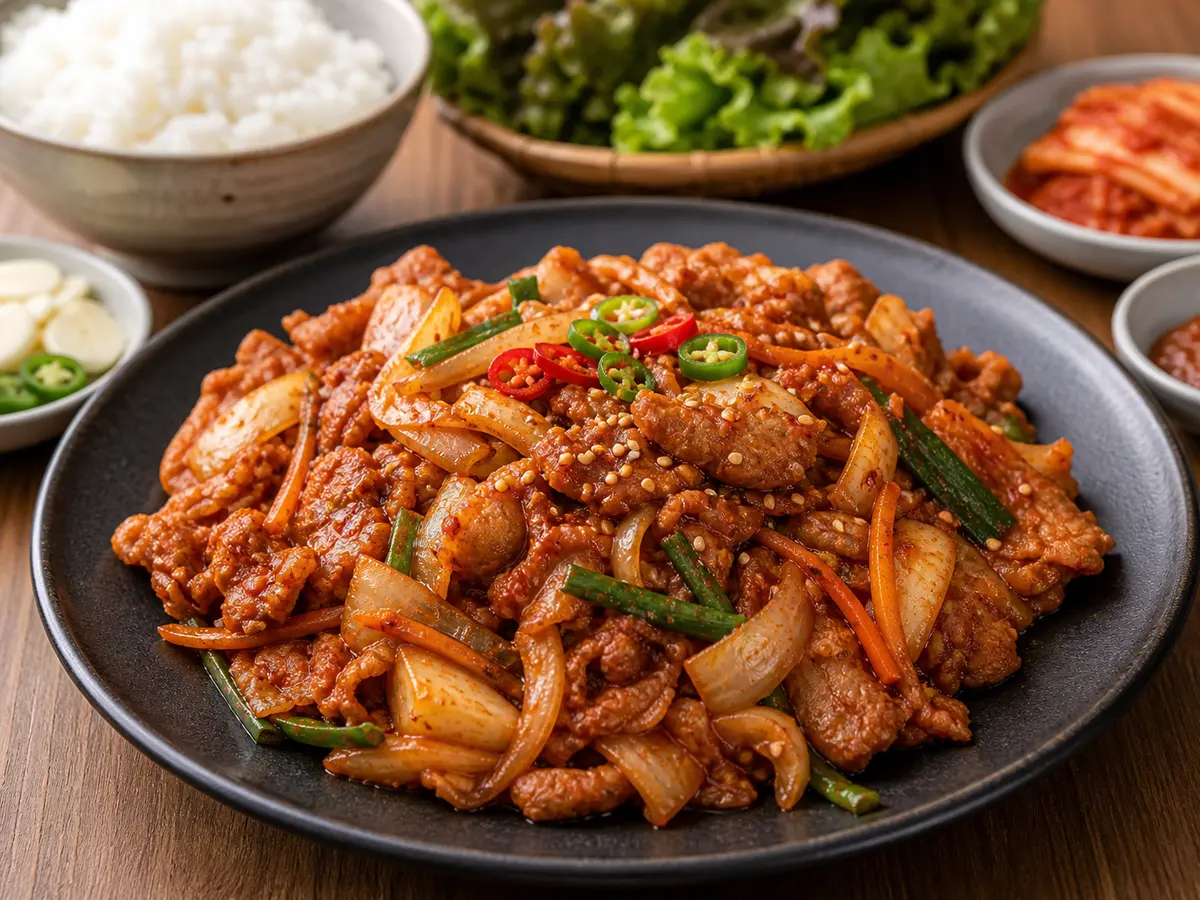
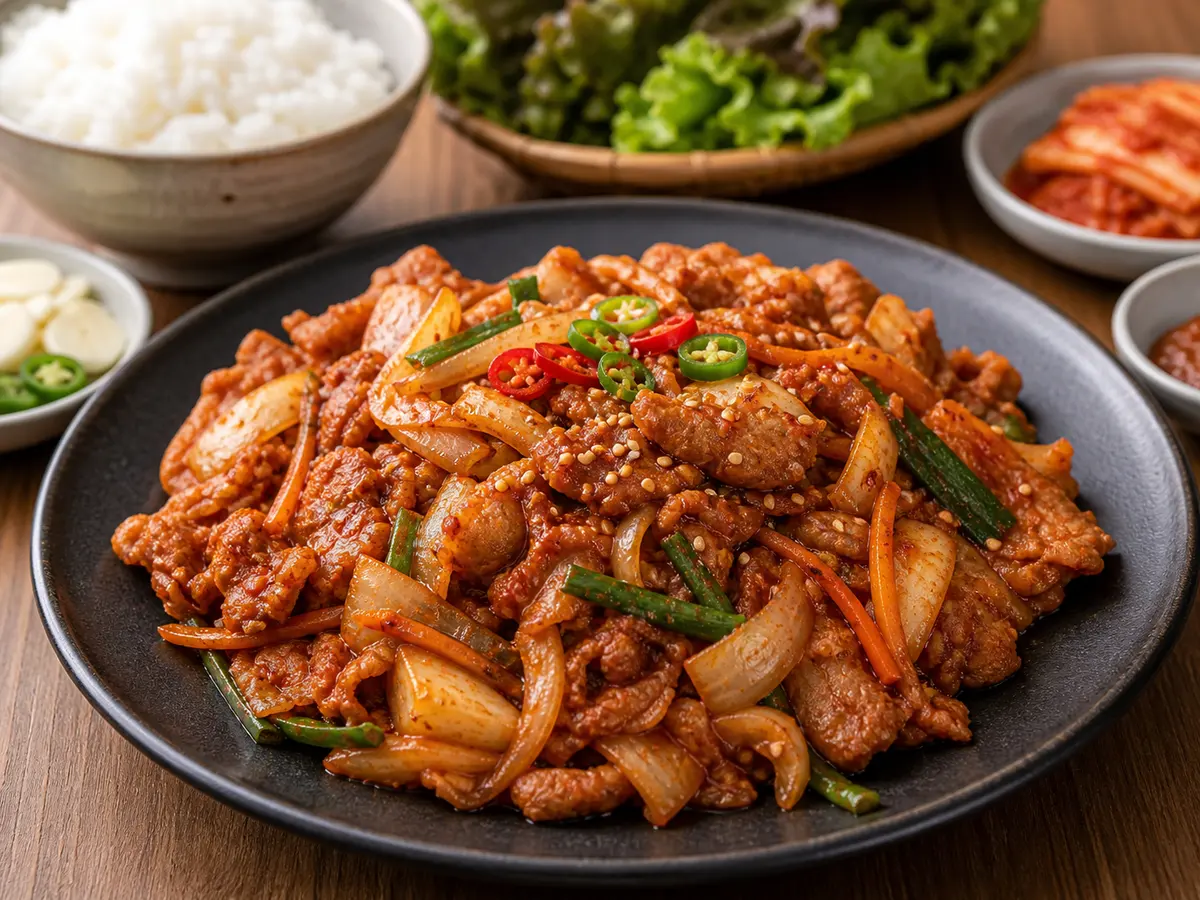
Bokkeum Jeyuk is a representative pork dish loved as a lunch menu at Korean restaurants or as a side dish for home meals. When thinly sliced pork is coated with red pepper paste seasoning and stir-fried with onions, green onions, and cabbage, the sweet and spicy aroma adds to the rice. For foreigners, it is easy to understand if you introduce it as “Korean spicy pork stir-fry,” and it is a good menu to show the Korean ssam culture.
If you look at the search results for Stir-fried Jeyuk on 10,000 Recipes, there are many different versions, including Stir-fried Jeyuk in Gisa Restaurant style, Baek Jong-won style Stir-fried Jeyuk, Stir-fried Jeyuk with Kimchi, and Stir-fried Jeyuk with Soy Sauce. The important point in common is to prepare the pork so that it is not too thick, coat it evenly with the seasoning, and fry it quickly over high heat to preserve the fiery flavor and shine. In this article, we summarized the most basic recipe, stir-fried pork with red pepper paste.
Ingredients for stir-fried pork
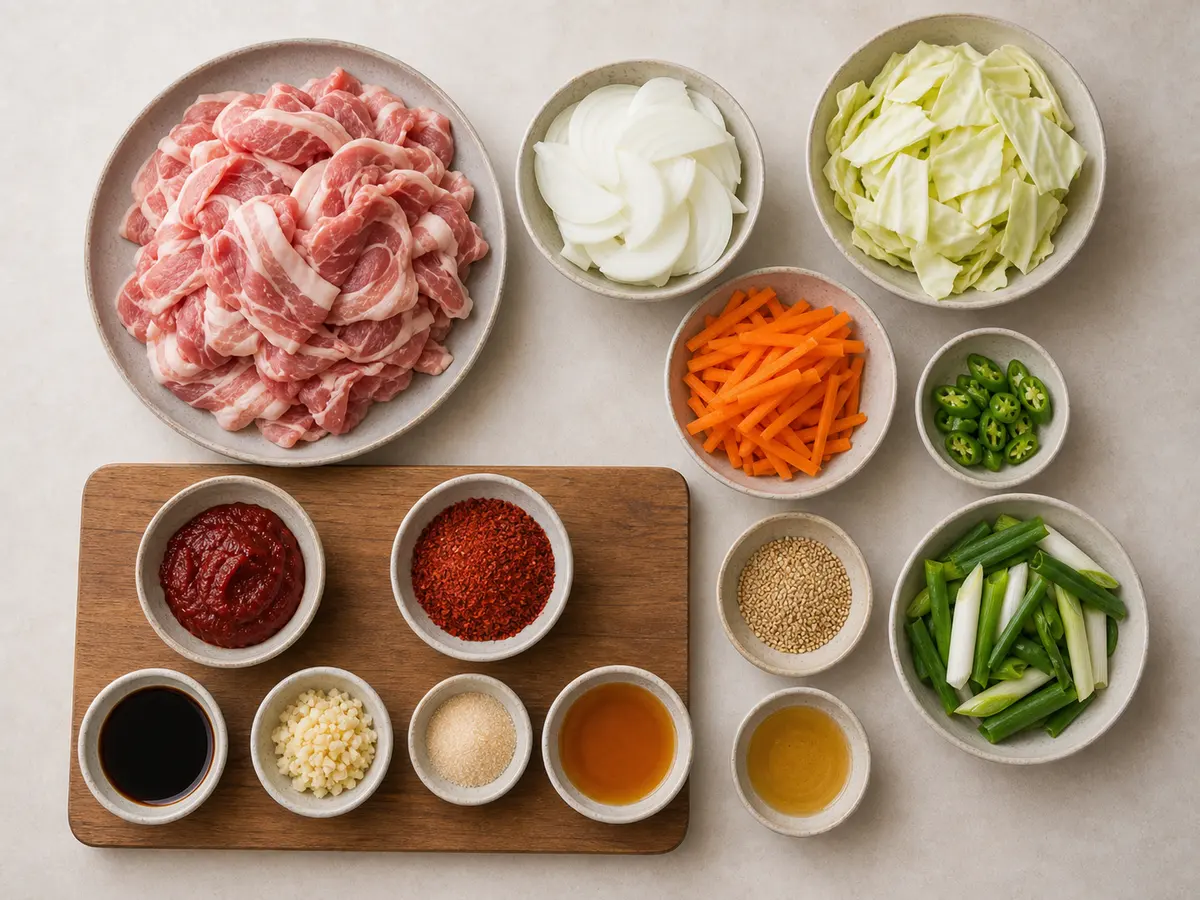
For 2-3 servings, prepare 500g of pork front leg or neck, 1/2 onion, 1 green onion, a handful of cabbage, a few carrots, and 1 Cheongyang pepper. Front leg meat is light and well seasoned, making it good for home cooking. If you use pork belly, it has a more savory and rich taste. The meat is not too thick for bulgogi, making it easy to stir-fry.
Make the seasoning by mixing 2 tablespoons red pepper paste, 1 tablespoon red pepper powder, 2 tablespoons soy sauce, 1 tablespoon minced garlic, 1 tablespoon sugar, 1 tablespoon cooking wine, 1 teaspoon sesame oil, and a little pepper. If you want to soften the sweetness, you can replace some of the sugar with oligosaccharide or plum syrup. Sprinkling sesame seeds at the end brings out the nutty flavor.
Marinating meat and preparing vegetables
If you remove the blood from pork by lightly pressing it with a paper towel, the odor will be reduced. Add 2/3 of the prepared marinade to the meat, mix well, and marinate for 10 to 20 minutes. If you don't have time, you can fry it right away, but if you marinate it for even a short time, the seasoning will penetrate into the meat and the taste will stabilize.
Chop the onion thickly and slice the green onion diagonally. Cut cabbage and carrots into bite-size pieces. If you slice vegetables too thinly, they will produce a lot of water and stale quickly during stir-frying, so it is best to prepare them a little thicker so that they still retain a chewy texture. If you don’t like the spicy taste, you can omit the Cheongyang pepper.
Stir-fry order
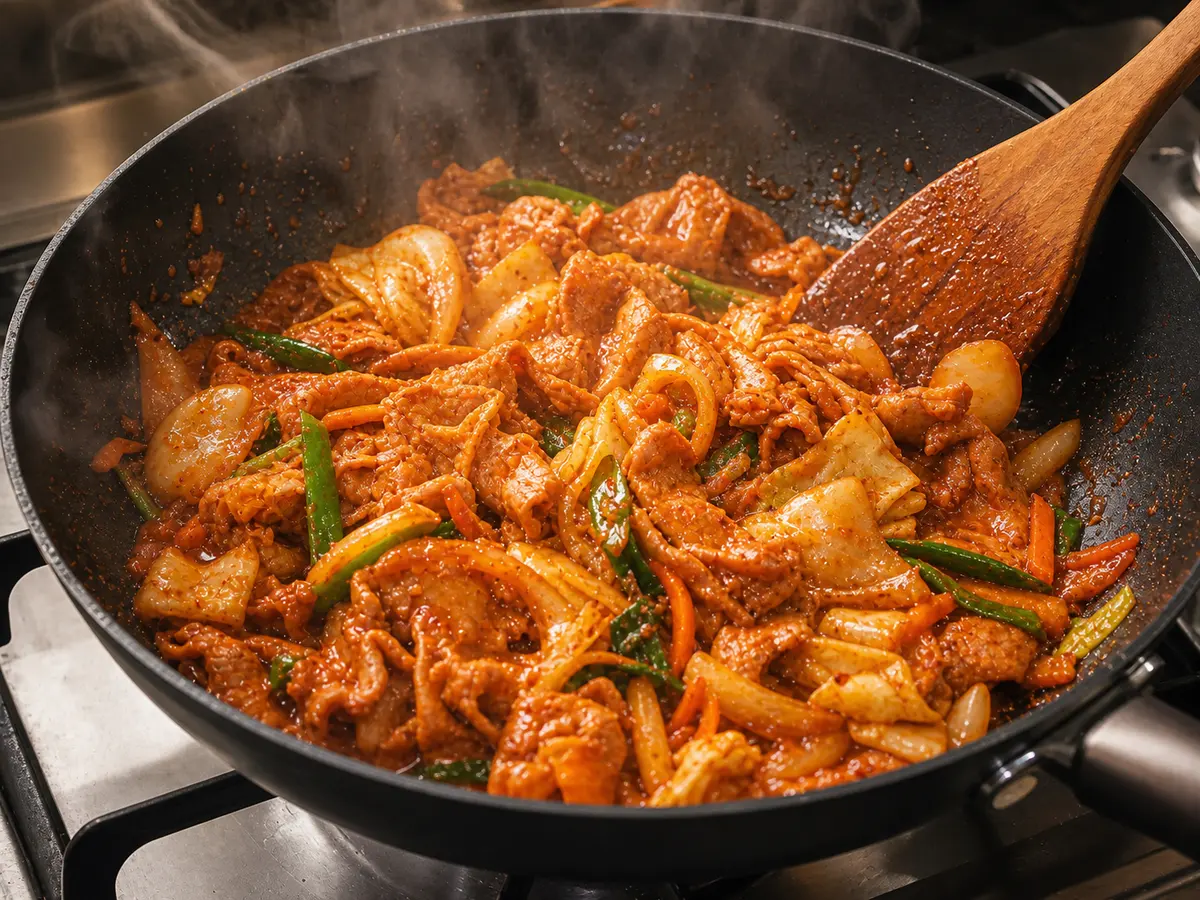
After sufficiently heating the pan, add a little cooking oil and fry the seasoned meat first. Rather than turning it frequently from the beginning, waiting until the surface of the meat is slightly cooked and then turning it over will reduce unpleasant odor and give it a more nutty flavor. When the meat is about 70% cooked, add onions, cabbage, and carrots and stir-fry over high heat.
When the vegetables are slightly wilted, add the reserved seasoning and fry until shiny. At the end, add green onions and Cheongyang peppers and stir-fry for about 1 more minute to bring out the flavor. If too much soup has formed, push the ingredients to the edge of the pan and simmer briefly over high heat. Stir-fried pork is most delicious when it is moist but not soggy.
Tips for eating deliciously
Stir-fried Jeyuk can be eaten as a Jeyuk deopbap on top of white rice, or it goes well with lettuce or perilla leaves as a wrap with rice, meat, garlic, and ssamjang. People who find spicy food uncomfortable can enjoy it much more easily if served with a mild side dish such as steamed egg or bean sprout soup.
The leftover stir-fried pork is delicious even if you stir-fry it with a little kimchi or rice the next day. However, when reheating, do not stir-fry it for a long time, but reheat it briefly over medium heat to prevent the meat from becoming tough. Spicy seasoning, the flavor of pork, and the sweetness of vegetables come together in one dish to make Jeyuk Bokkeum, a practical Korean dish that is recommended even to those learning Korean food for the first time.