Making clear and deep Korean-style beef rib soup
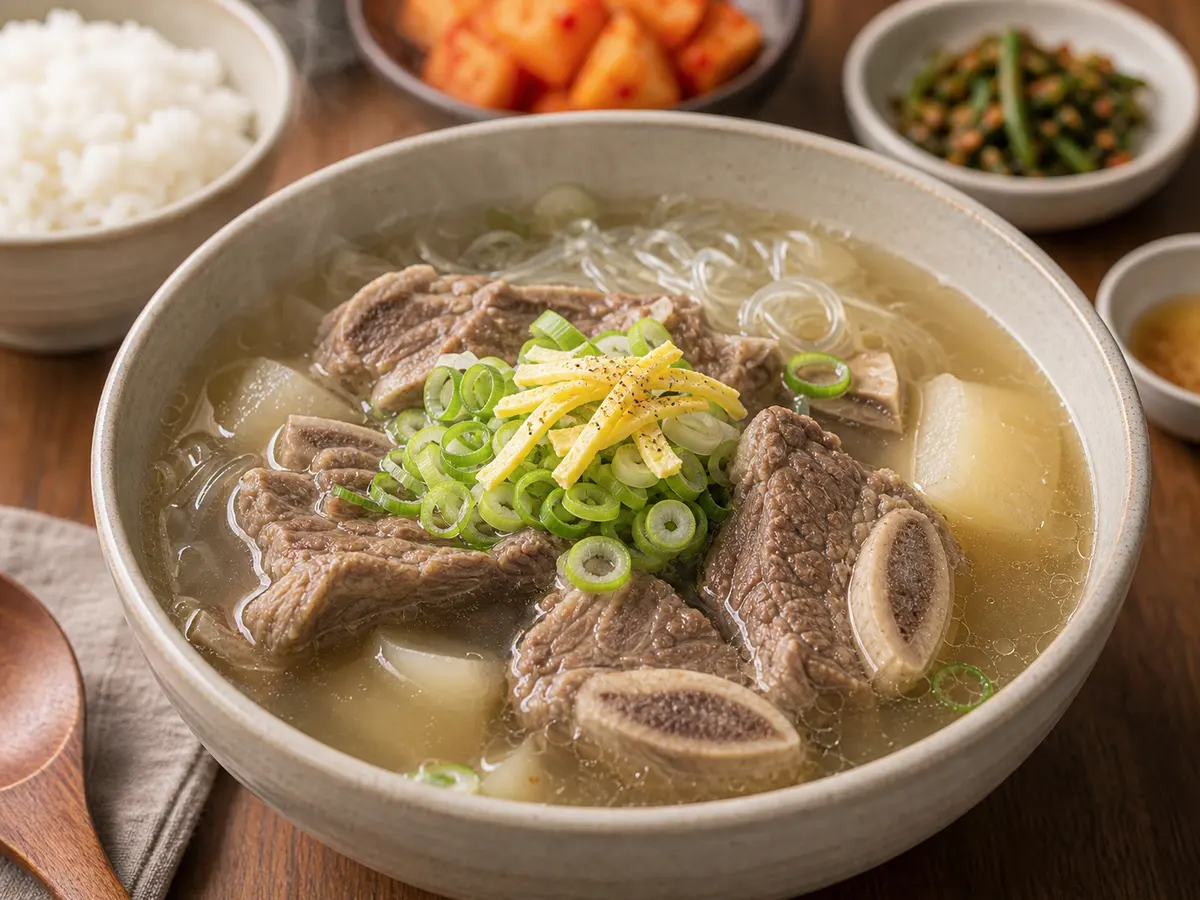
Galbitang is a representative Korean health food made by boiling beef ribs for a long time and enjoying a clear, deep soup. Since it doesn't contain any spicy seasoning, it's easy to eat even for foreigners who are new to Korean food, and since it contains a large amount of ribs, just one bowl is filling. In Korean restaurants, it is often served with radish kimchi, so the lightness of the soup goes well with the cool taste of radish kimchi.
If you search for galbitang in 10,000 Recipes, you will see various versions such as beef rib soup, oriental medicine rib soup, king rib soup, and abalone rib soup. A common and important process is to drain the blood from the beef ribs, blanch them once to remove impurities, then add radish and spiced vegetables and boil them slowly. In this article, we have compiled a clear beef rib stew recipe that is easy to follow at home.
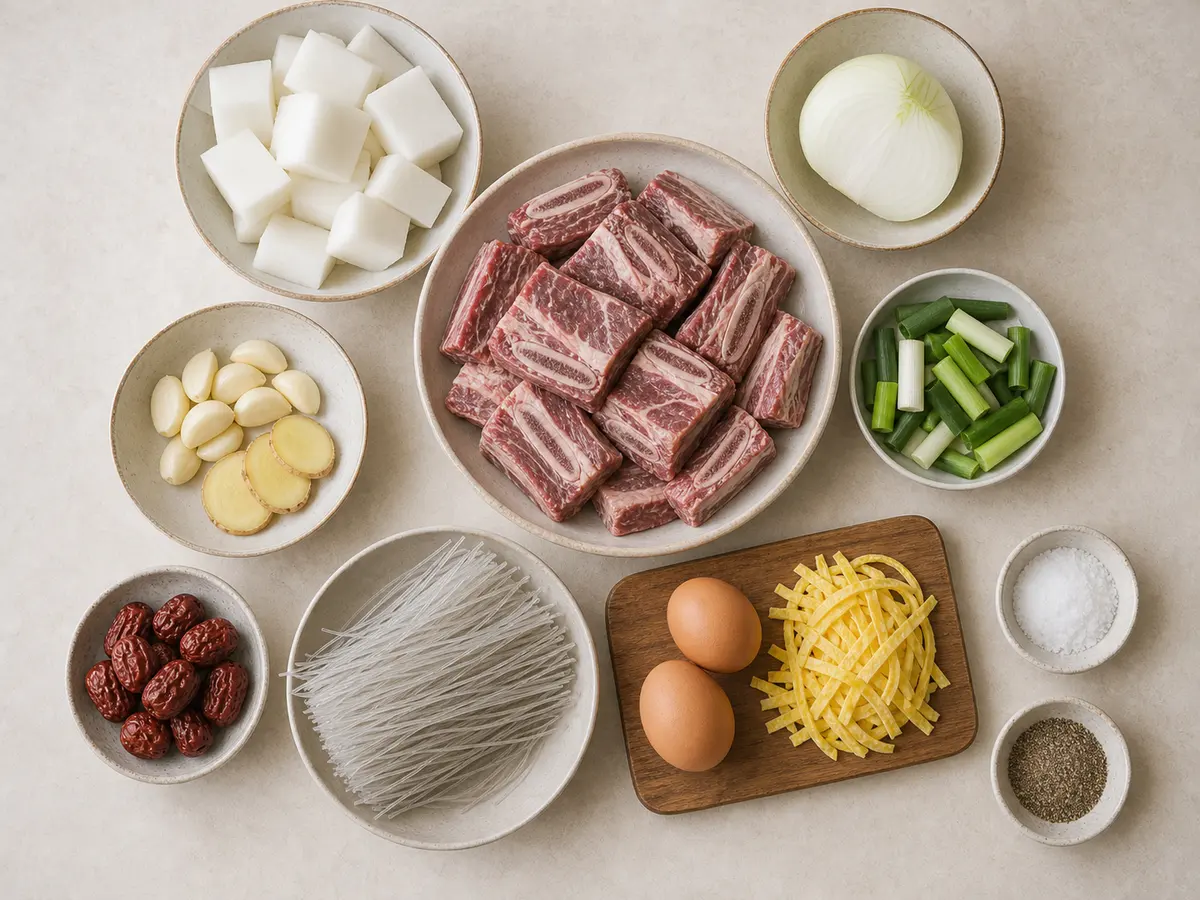
Galbitang ingredients
For 3-4 servings, prepare 1kg of beef ribs, 300g of radish, 1 onion, 2 green onions, 8 cloves of garlic, 2-3 cloves of ginger, 2.5L of water, 1 tablespoon of soup soy sauce, salt, and pepper. Toppings include soaked glass noodles, fried egg, and sliced green onions, making it taste like the galbitang you eat at a restaurant. Adding a little jujube or peppercorns will make the flavor cleaner.
Refrigerated beef ribs are easier to prepare than frozen ribs, but you can make them just as delicious using frozen ribs. The important thing is to remove blood. Soak it in cold water for 1-2 hours and change the water 2-3 times in between to make the soup much clearer. If you are short on time, it is recommended to soak for at least 30 minutes.
Removing blood and blanching
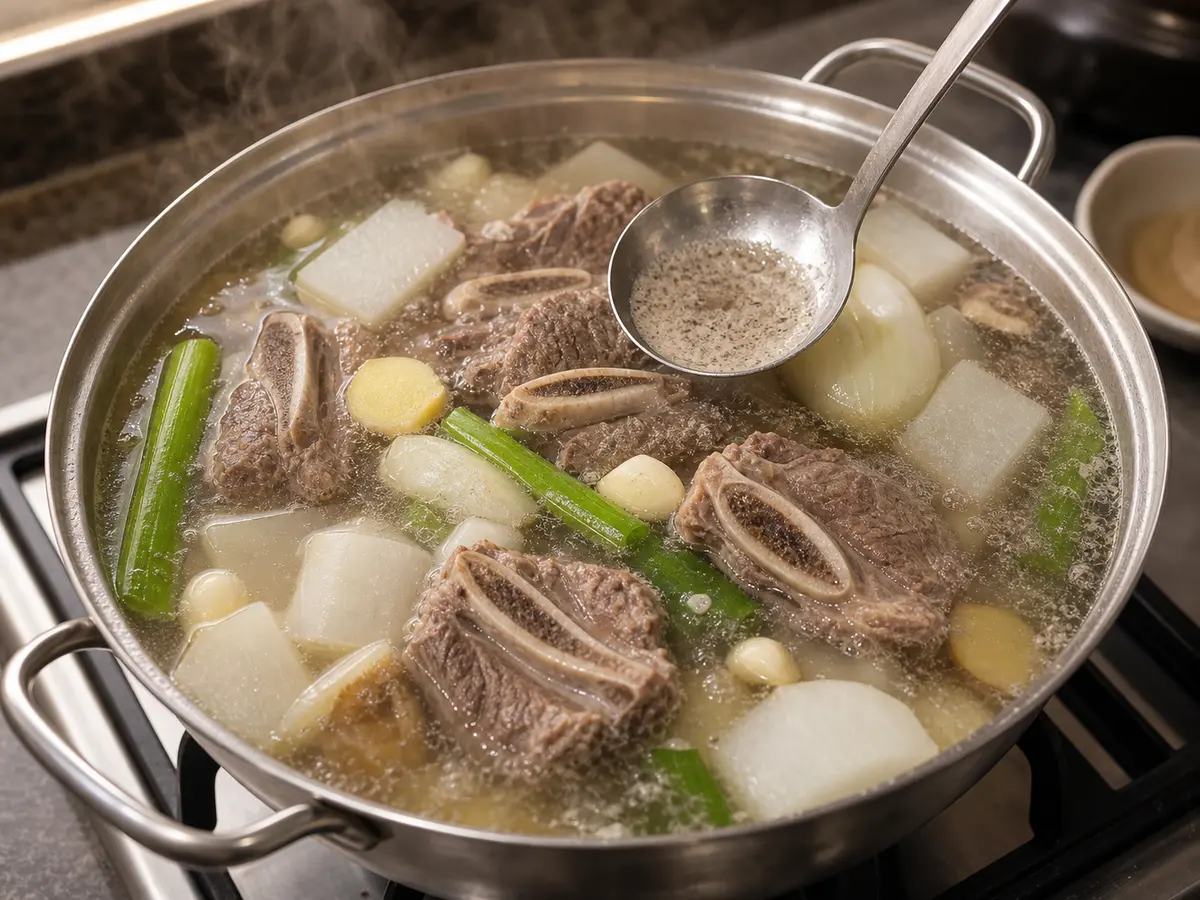
Place the ribs, drained of blood, in boiling water and blanch for about 5 minutes. During this process, foam and impurities rise, which must be removed to prevent the galbitang soup from becoming cloudy. Wash the blanched ribs under running water and remove any remaining debris between the bones. It is a good idea to wash the pot thoroughly before boiling it again.
Put the trimmed ribs, water, radish, onion, green onion, garlic, and ginger in a new pot and boil over medium heat. When it starts to boil, reduce the heat to low and simmer slowly for 1 hour and 30 minutes to 2 hours. If you skim off the oil and foam that rises from time to time, the soup becomes clear and clean. You can reduce the time by using a pressure cooker, but the soup tastes smoother if you simmer it slowly in a regular pot.
Seasoning and finishing
When the ribs are gently cooked, remove the onions, green onions, garlic, and ginger. You can cut the radishes into bite-size pieces and add them back. Add 1 tablespoon of soy sauce to the soup to add flavor, and adjust the seasoning with salt if necessary. If you add too much soy sauce, the color of the soup may darken, so it is better to keep the rib soup clear with salt.
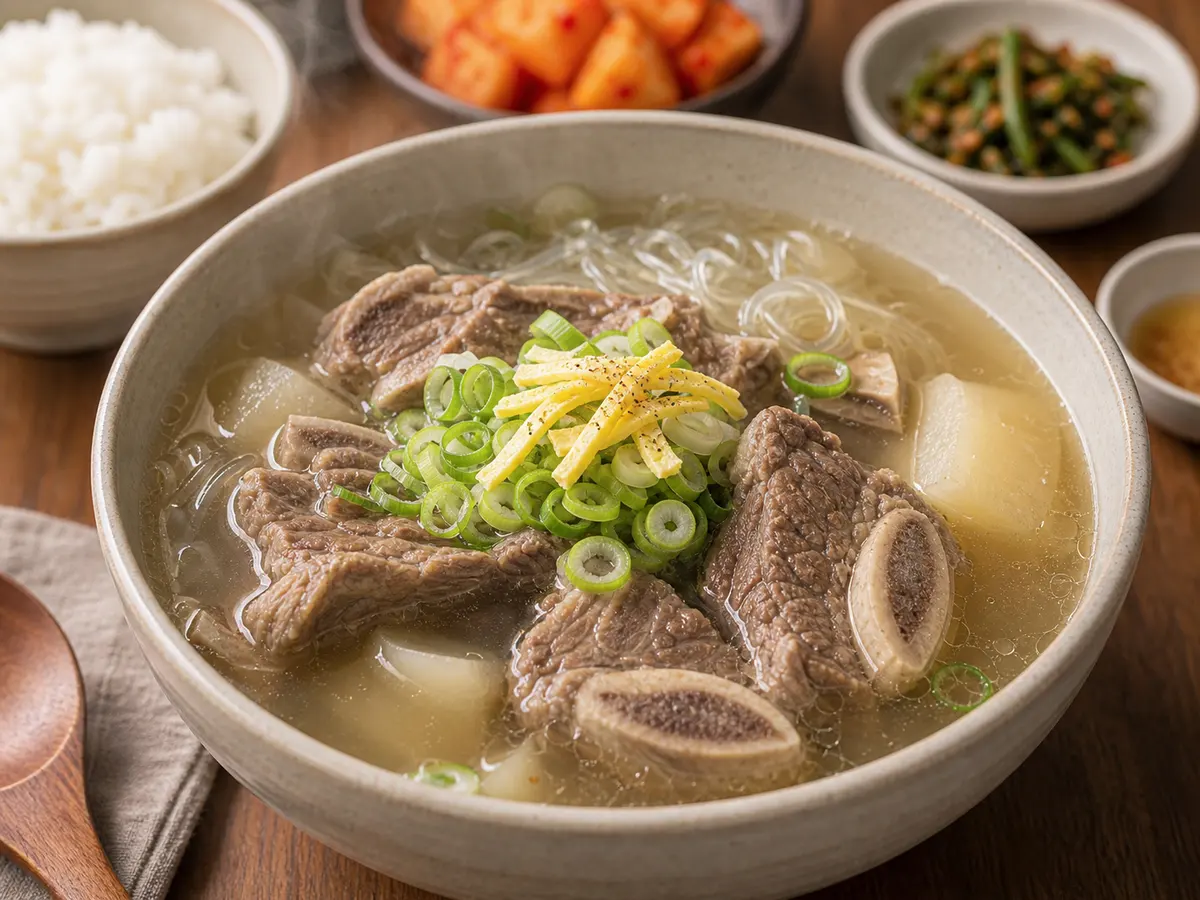
Be sure to soak the glass noodles separately and add them right before eating to prevent them from spreading. Place ribs, radish, and glass noodles in a bowl, pour hot broth, and top with green onions, beaten eggs, and pepper. You can also eat the meat lightly dipped in mustard soy sauce. If you mix a little soy sauce, vinegar, mustard, and sugar, it goes well with galbitang meat.
Tips for eating deliciously
You can eat galbitang with rice, or you can eat the soup and rice separately. Adding radish radish kimchi or cabbage kimchi adds a refreshing taste to the light soup, creating a good balance. For foreigners, it is easy to understand if you explain it as “clear Korean beef short rib soup,” and it is a good Korean food to recommend to people who are not used to spicy food.
If you refrigerate leftover rib stew, the oil will solidify on top. You can eat it with a cleaner taste by skimming off the solidified oil and reheating it the next day. It requires a bit of preparation, but once boiled, it becomes a filling and luxurious meal, making it a good dish to introduce Korea's warm soup culture.