Making a hearty and spicy Korean-style gamjatang
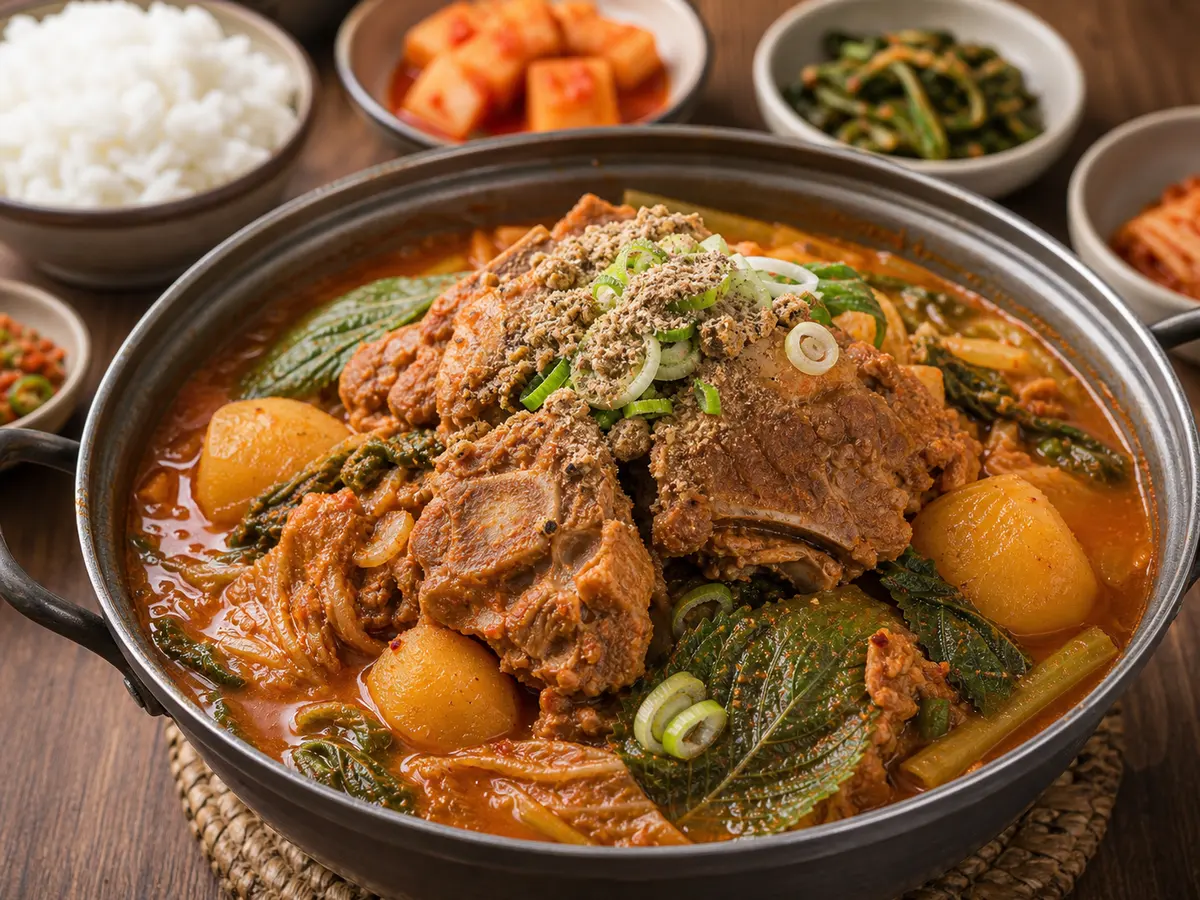
Gamjatang is a Korean-style hotpot that is made by boiling pork backbone for a long time to bring out the rich flavor of the meat, and adding potatoes, legumes, perilla leaves, and perilla seed powder to enjoy a generous portion. The name makes the potato seem like the main character, but the real point is the fun of eating the soup from the backbone and the meat on the bone. For foreigners visiting Korea, it is easy to understand if you explain it as “Korean pork backbone stew.”
If you search for Gamjatang in 10,000 Recipes, there are many different versions such as Pork Backbone Gamjatang, Siraegi Gamjatang, Aged Ji Gamjatang, and Bone Gamjatang. What is important in common is to reduce the blood and unpleasant odor of the pork backbone, soak the beef or radish in the seasoning, and boil it thoroughly. In this article, we have summarized basic gamjatang that can create a restaurant-like feel at home.
Gamjatang ingredients
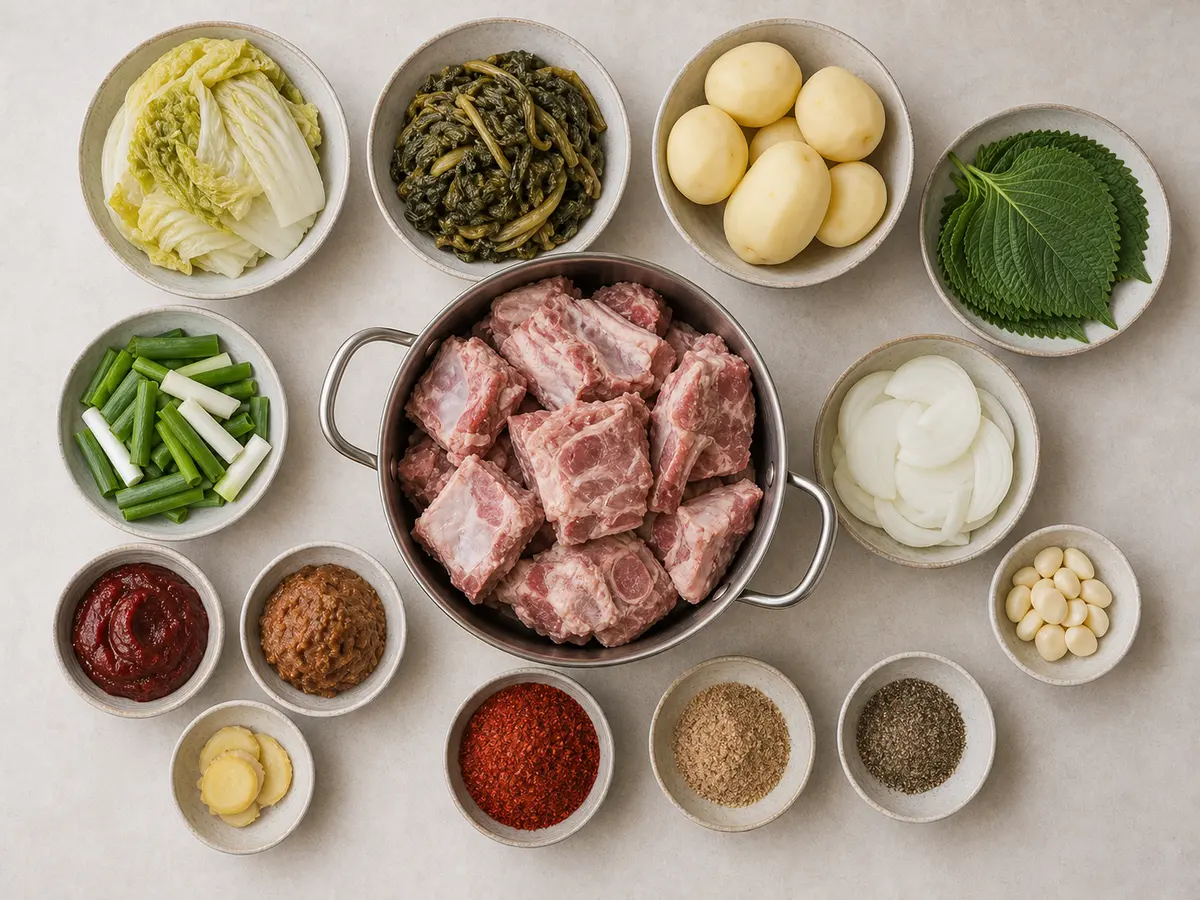
For 3 to 4 servings, prepare 1.2kg of pork backbone, 3 potatoes, 300g of boiled beef or perilla, 1 green onion, 1/2 onion, 10 perilla leaves, 8 cloves of garlic, 2-3 cloves of ginger, and 2.5L of water. The basic seasoning is 1 tablespoon of soybean paste, 1 tablespoon of red pepper paste, 2 tablespoons of red pepper powder, 2 tablespoons of soup soy sauce, 1 tablespoon of minced garlic, a little pepper, and 3 tablespoons of perilla seed powder.
Gamjatang has a much deeper flavor if you add green beans or dried radish in it. When using boiled beef, squeeze out the moisture, cut it into bite-sized pieces, and mix it with some of the seasoning first so it does not mix with the soup. Perilla leaves and perilla seed powder are added at the end to enhance the flavor.
Pork spine preparation
Soak the pork backbone in cold water for 1-2 hours to remove blood, changing the water several times in between. This process must be done sufficiently to ensure that the soup is clean and smells reduced. Blanch the spine, with the blood removed, in boiling water for about 7 minutes, then wash it in running water to remove impurities between the bones. Wash the pot thoroughly, fill with new water, and boil again.
In a new pot, add the spine, water, onion, white part of the green onion, garlic, and ginger and bring to a boil. When it starts to boil, lower the heat to low and simmer for about 1 hour. If you skim off the foam and oil that rises at this time, the soup will taste clean and not heavy. The softer the spine, the more flavorful the gamjatang becomes.
Seasoning and boiling order
Make the seasoning sauce by mixing soybean paste, red pepper paste, red pepper powder, soup soy sauce, minced garlic, and pepper. Add some of the seasoning sauce to the boiled beef and mix well. Once the spine broth has fully simmered, take out the onions and spiced vegetables, add potatoes and seasoned beef, and simmer for another 20 minutes. When the potatoes are big enough to fit with chopsticks, check the seasoning.
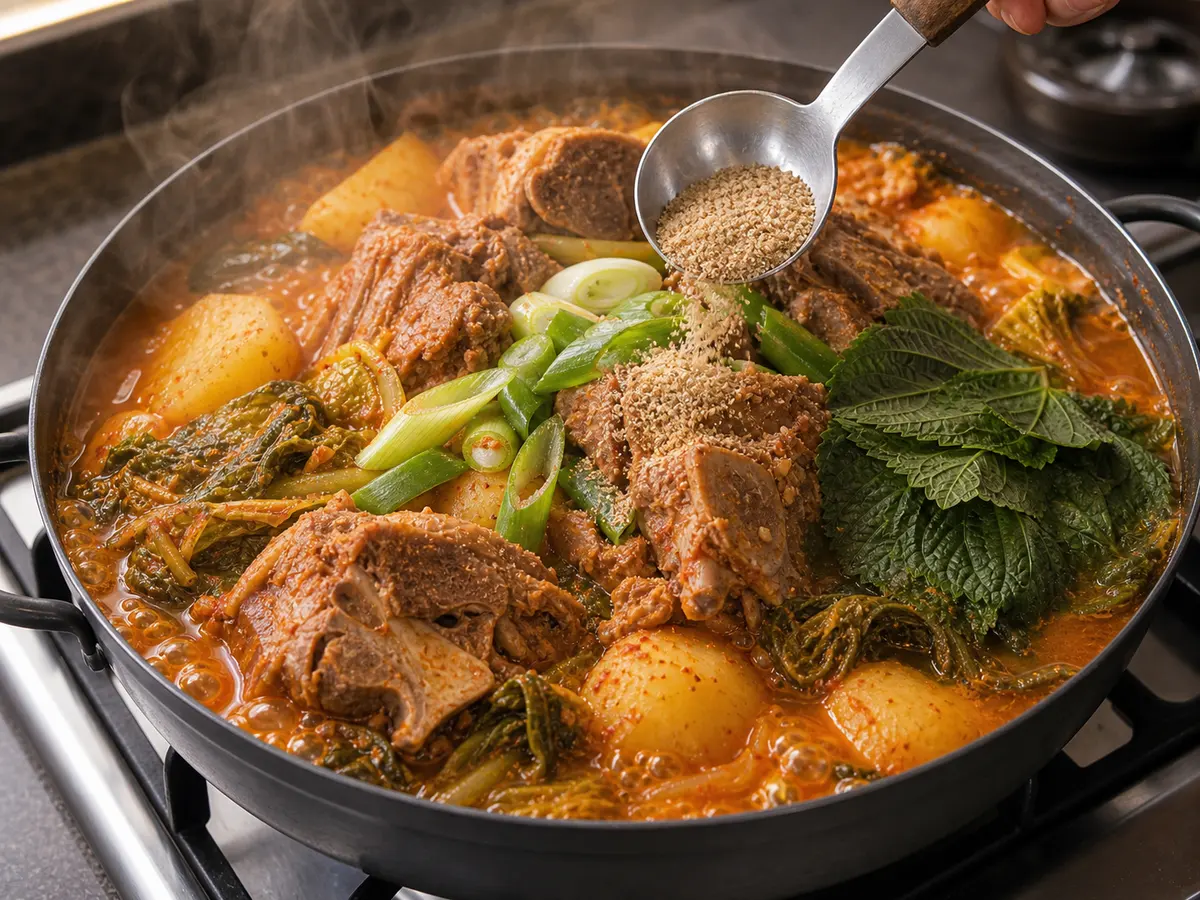
Adjust the seasoning with soup soy sauce or salt, and at the end, add perilla leaves, green onions, and perilla seed powder and boil for another 3 minutes. If perilla seed powder is boiled for too long, the flavor may diminish, so it is best to add it at the end. If you want more spiciness, add Cheongyang pepper. If you want a stronger taste, you can add a little red pepper powder.
Tips for eating deliciously
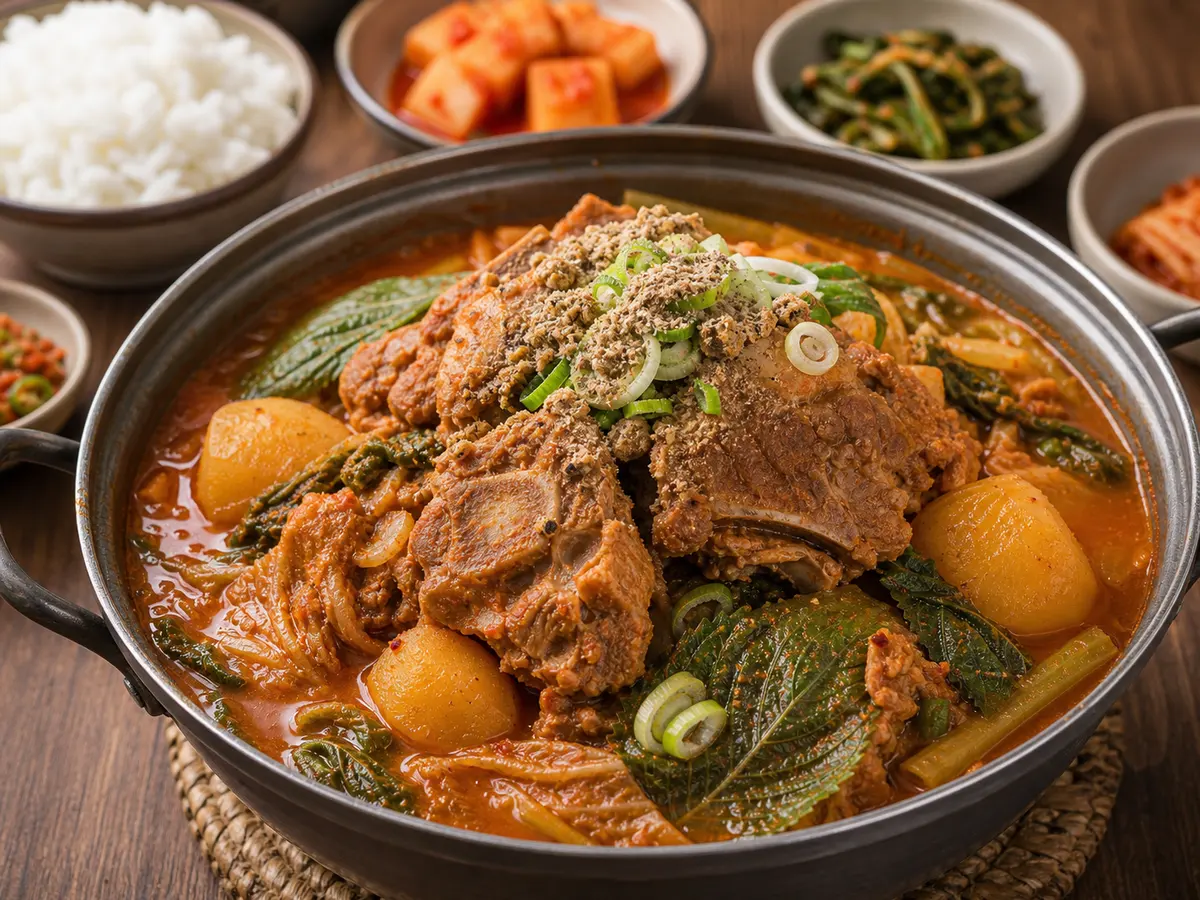
Gamjatang is best enjoyed when shared in a large pot. Eat the meat off the bone, dip it in mustard-soy sauce, and eat the soup with rice. Adding rice, dried seaweed flakes, and sesame oil to the remaining broth and finishing it like fried rice is also very popular in Korea.
Gamjatang takes a bit of time to cook, but once you make it, it is generous in quantity and very satisfying. This menu combines Korean-style hangover soup and hotpot culture with a combination of spicy broth, soft meat, the cozy texture of potatoes, and the scent of perilla leaves and perilla seeds. This is a Korean dish that is especially recommended to foreigners who like spicy soup dishes.