Making simple Korean-style bossam
What kind of food is bossam?
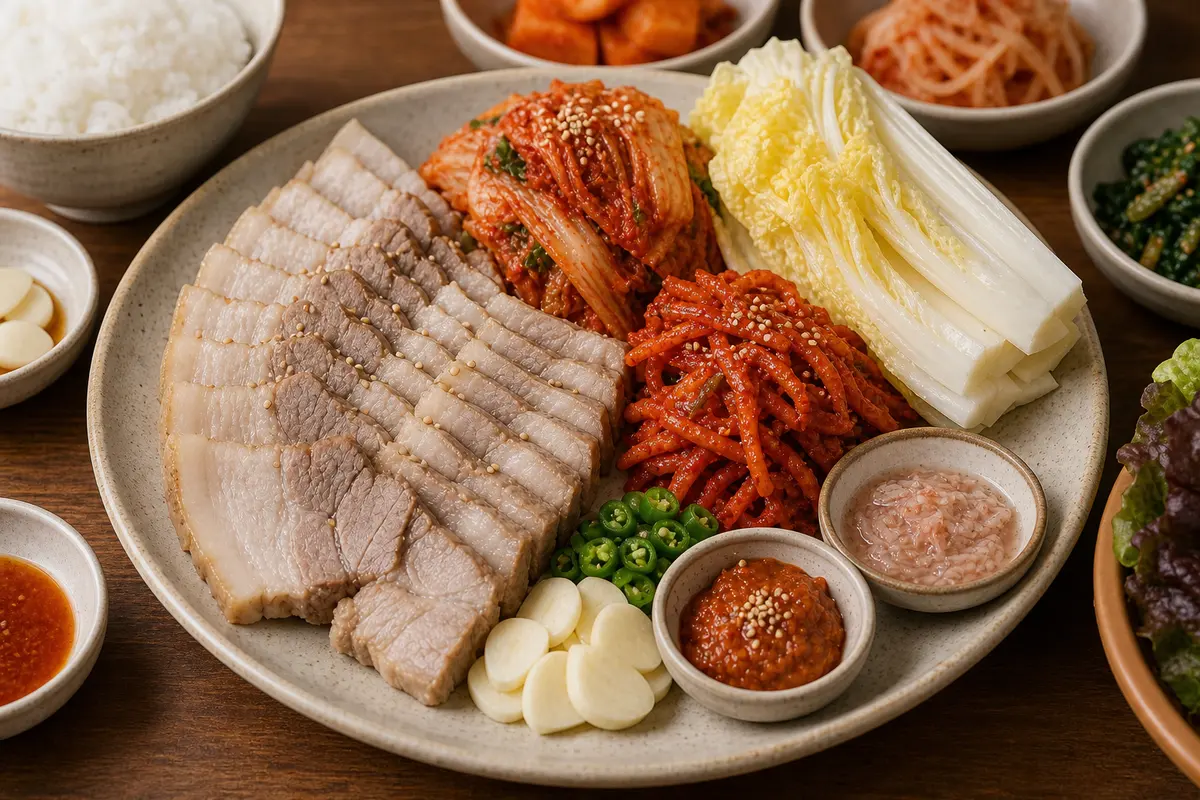
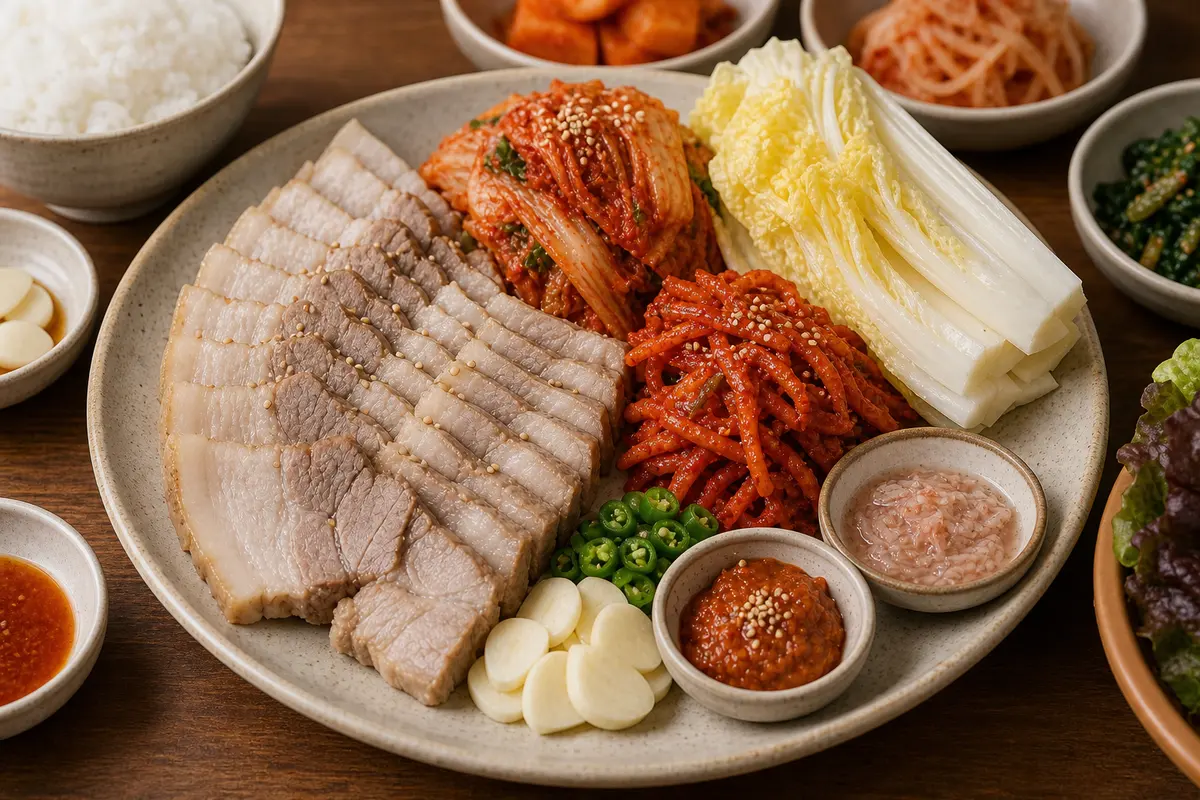
Bossam is a Korean food made by gently boiling pork with spiced vegetables, slicing it into thin slices, and wrapping it with cabbage, bossam kimchi, radish kimchi, and ssamjang. It's light because it's not fried or baked, and the kimchi and sauce give it a rich taste. For foreigners, it is easy to understand if it is explained as a Korean-style boiled pork ssam dish.
If you search for bossam in 10,000 Recipes, you will see various recipes such as how to boil bossam, bossam kimchi, moisture-free bossam, and boiled bossam. Today, we have summarized the most basic boiled pork bossam method and how to boil it gently at home without any unpleasant smell.
Ingredients Preparation
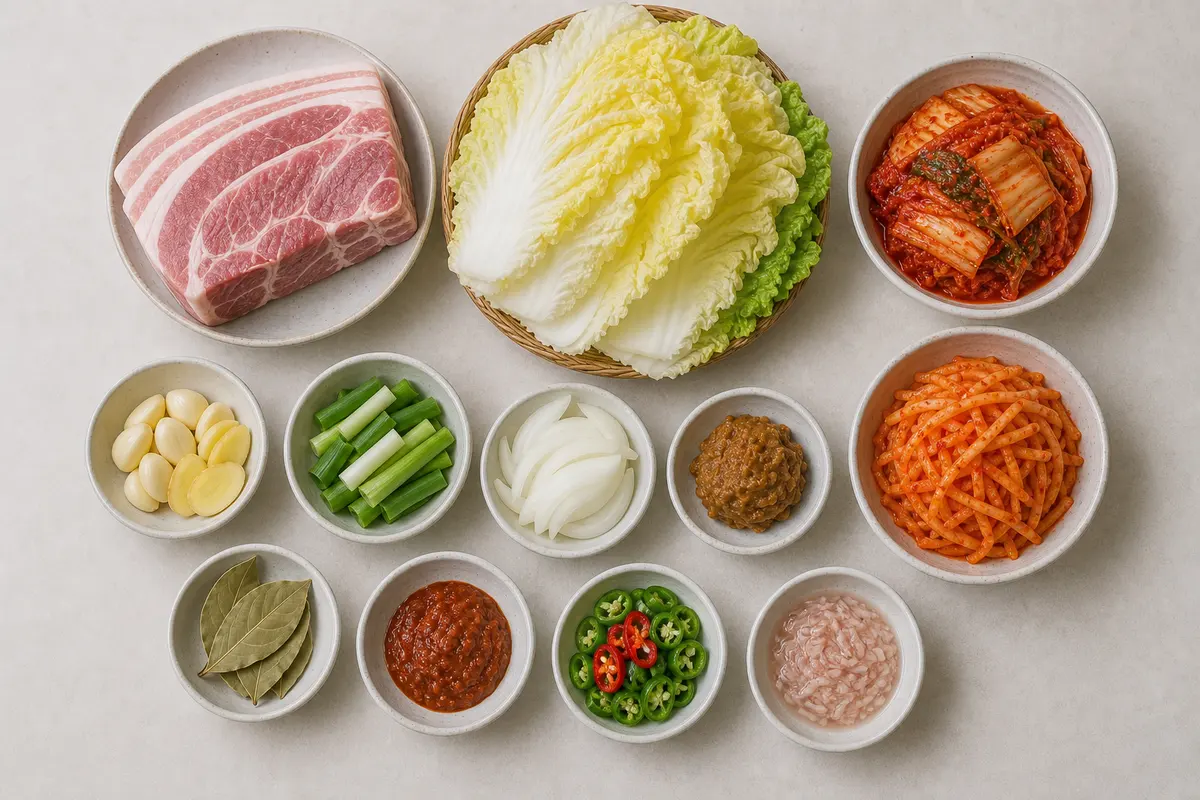
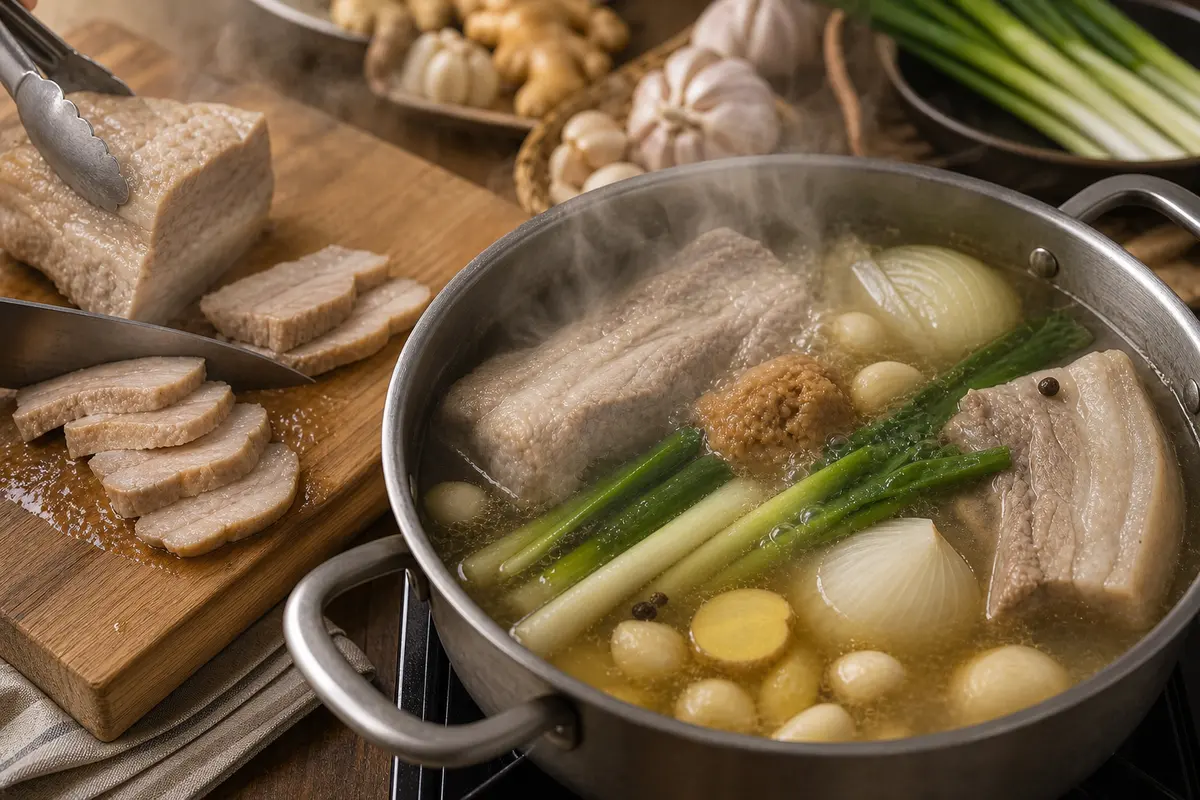
For 2-3 servings, prepare 700g of whole pork belly or front leg, green onion, onion, garlic, ginger, soybean paste, bay leaf, and whole pepper. As a side dish, you can prepare pickled cabbage or boiled cabbage leaves, bossam kimchi, radish kimchi, ssamjang, salted shrimp, garlic, and red pepper.
Meat can be dry if there is too little fat, so if you use cuts with a balanced amount of fat and lean meat, such as pork belly or ogyeopsal, it will be tender. Front leg meat is a little lighter and less expensive, making it good for home cooking.
How to Boil Meat
Pour plenty of water into a pot, add green onion, onion, garlic, ginger, soybean paste, and peppercorns and boil. When the water boils, add the meat and boil over medium heat for 40 to 50 minutes. Soybean paste reduces odor and adds a subtle savory flavor, while ginger and green onion neatly balance the flavor of the meat.
To check if the meat is cooked, when you poke it with a chopstick, clear juices come out. Instead of cutting the boiled meat right away, let it sit for about 5 minutes and then cut it, so the juices will stabilize a little more.
Order of serving bossam
Slice the meat into bite-size pieces that preserve the texture and arrange it neatly on a plate. Add cabbage leaves, bossam kimchi, radish kimchi, garlic, red pepper, ssamjang, and salted shrimp on the side. When you eat bite-sized pieces of cabbage wrapped with meat, kimchi, and sauce, you get a balanced taste of lightness and spiciness.
If you don't have bossam kimchi, it's delicious with ripe cabbage kimchi or raw radish vegetables. Since salted shrimp has a strong salty taste, it is recommended to add a little more seasoning.
Tips for eating deliciously
Bossam is most tender when the meat is warm. You can eat moist meat by cutting the remaining meat into thin pieces, storing it in the refrigerator, and warming it in a steamer or briefly in broth. Mixing a little minced garlic or sesame oil into ssamjang adds a nutty taste.
When you order bossam at a Korean restaurant, it usually comes with kimchi and ssam vegetables for sharing among several people. This menu is recommended for foreigners who are looking for light Korean food rather than spicy soup while traveling.
Good ordering tips for foreigners
Bossam is not very spicy, so even people who are new to Korean food can eat it relatively comfortably. However, since the bossam kimchi or radish kimchi that comes with it can be spicy, it is best to first taste it with just the meat, cabbage, and ssamjang, and then add kimchi little by little.
When making it at home, don't immediately throw away the water the meat was cooked in. You can skim off the oil and use a little of it to make the soup. Leftover Bossam meat goes well with stir-fried kimchi or added to soybean paste stew, making it a highly versatile dish once made.
It is good for sharing with several people and adds to the ambience of the table.