Not all carbonated beverages that seem healthy go well with alcohol. In a home bar, the ingredient list is part of the recipe.
Functional drinks are mixers with a stronger personality than tonic water.
There are many beverages with a functional image, such as mate, matcha, kombucha, and herbal carbonated beverages. The vivid flavors of these drinks make it easy to freshen up cocktails, but their sweetness and caffeine can slow down your drinking experience.
Why it's important
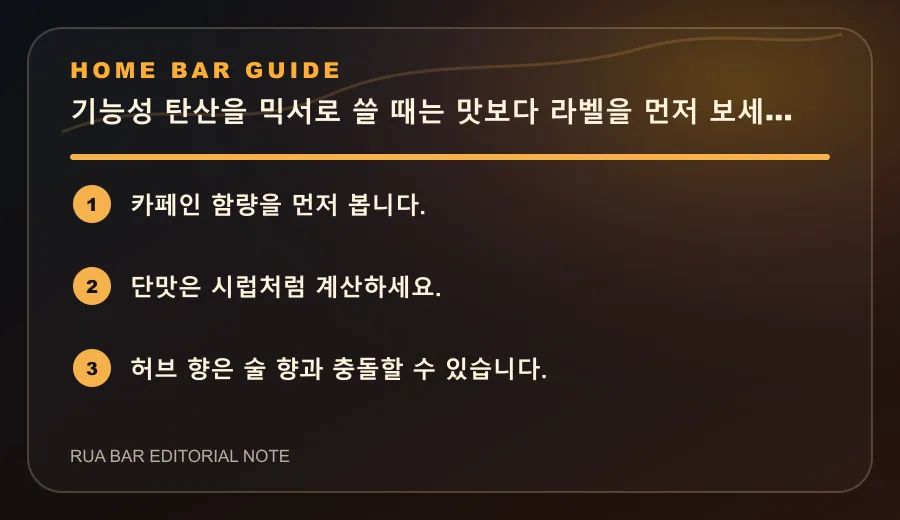
It's easy to feel up-to-date by using functional drinks in your home bar. However, if you drink caffeinated drinks and alcohol together, you will feel tired later and it is easy to drink too much, so you need to check.
Practical method
Kombucha is more stable in gin, yuzu carbonation is more stable in vodka, and lime carbonation is more stable than mate in tequila. For sweet functional drinks, remove the syrup, and if it is too acidic, reduce the lemon juice.
Things to watch out for
It is best to avoid caffeine mixers before sleep. Products with strong herbal aromas may clash with more flavorful liquors such as whiskey or aged rum.
Functional mixers are trendy, but they're not all-purpose. If you look at the label and calculate the sugar, caffeine, and flavor, the chances of failure are greatly reduced.